 seolounge

Today, thousands of different signals are used by search engines to determine which websites deserve to appear at the top of the results page. While having high-quality content and technical optimization is certainly important, it is only part of the equation. A large percentage of your total ranking potential comes from outside of your website.
This is where Off-Page SEO can play a vital role.
Off-Page SEO is a method of Search Engine Optimization that focuses on increasing your website’s authority, trust, and popularity by using external factors such as backlinks and social media. This allows search engines to better understand how popular and trustworthy your website is in its niche or industry.
What Is Off-Page SEO?
Off-Page SEO refers to all optimization activities carried out outside a website to enhance its position on a Search Engine Results Page.
Off-Page SEO is different from On-Page SEO because, instead of focusing on website components such as content and meta tags, Off-Page SEO focuses on external factors that measure a website’s authority and popularity.
Some of the Off-Page SEO techniques include:
- Developing quality backlinks
- Brand mentions
- Social Media
- Guest Blogging
- Digital PR
- Online Reputation
Search engines use these Off-Page SEO techniques to measure how trustworthy and popular a website is. The more reputable websites linking to a website, the more authoritative it is.
Off-Page SEO vs On-Page SEO vs Technical SEO
Understanding how different SEO components work together is important for building a successful strategy.
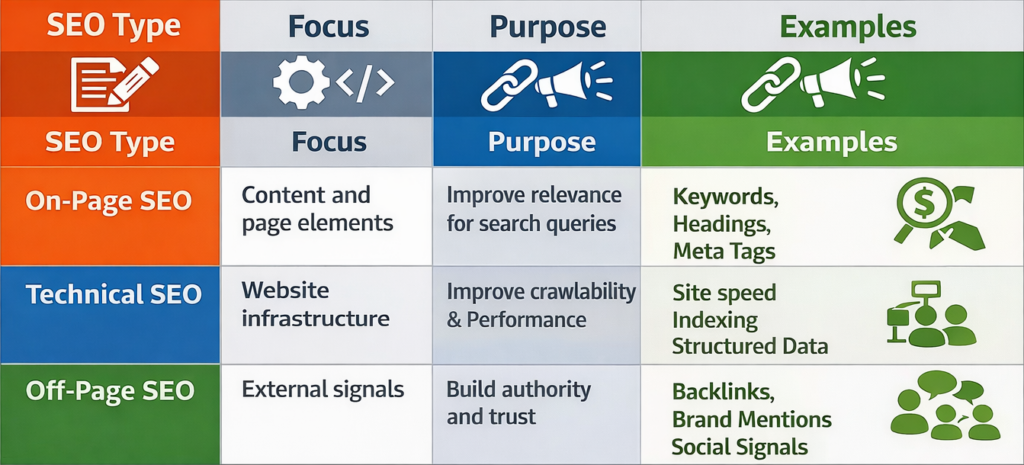
While on-page SEO helps search engines understand your content, off-page SEO helps them determine whether your website deserves to rank above competitors.
Why Off-Page SEO Is Important for Rankings
Off-Page SEO is a key contributor in determining the ranking of a website in the search engine results page. This is because, for a search engine, Off-Page SEO is a more difficult task to manipulate.
Following are some of the key benefits that Off-Page SEO offers to a website or a webpage:
- Builds Authority for Your Website: When several credible sources are referring to your content, it is a vote of confidence.
- Improves Trust and Credibility: Off-Page SEO improves the trust and credibility that a webpage or a website enjoys.
- Increases Referral Traffic: Off-Page SEO increases the number of visitors that a webpage or a website receives from credible sources.
- Facilitates Search Engines in Finding Content: Off-Page SEO helps in improving the crawling capacity of a search engine.
Strengthens Brand Visibility: Mentions across blogs, forums, and social media increase brand awareness and recognition.
How Search Engines Evaluate Off-Page SEO Signals
There are various factors that search engines consider while evaluating off-page SEO signals. These factors help search engines determine the quality of the off-page SEO signals.

- Backlink Quality: Backlinks obtained from authoritative sites are of higher quality than those obtained from low-quality sites.
- Domain Authority: High authority sites can transfer more ranking power while linking to your website.
- Relevance of Linking Domains: Backlinks obtained from sites related to your domain are of higher SEO value.
- Anchor Text: Anchor text is used by search engines to determine the context of the page being linked.
- Link Diversity: A diverse backlink profile should include links obtained from various types of sites, such as blogs, news sites, forums, etc.
Top Off-Page SEO Strategies That Improve Rankings
The key to developing an effective off-page SEO strategy is using the right techniques.
1. High-Quality Link Building
Link building is the process of getting backlinks from other websites to your website. A backlink is simply a link from one site that points to another. In SEO, these links act as signals of trust, showing search engines that your content is valuable and credible.
Because of this, link building is a key ranking factor in SEO. However, it is important to focus on quality over quantity, as a few links from authoritative websites are more valuable than many low-quality links.
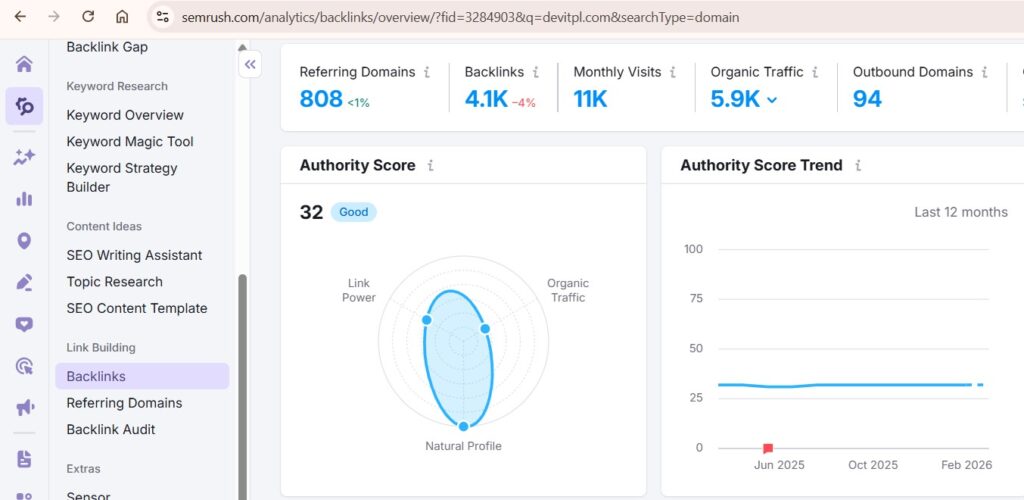
The most successful link building techniques include:
- Editorial backlinks from authoritative blogs
- Contextual links within relevant articles
- Resource page links
- Industry citations
High-quality backlinks are the key indicators for the search engines that the content is of high quality.
2. Guest Blogging
Guest blogging means writing and publishing an article on another website in your industry. It helps you share your knowledge with a new audience while also earning a backlink to your website, which can improve your SEO and online visibility.
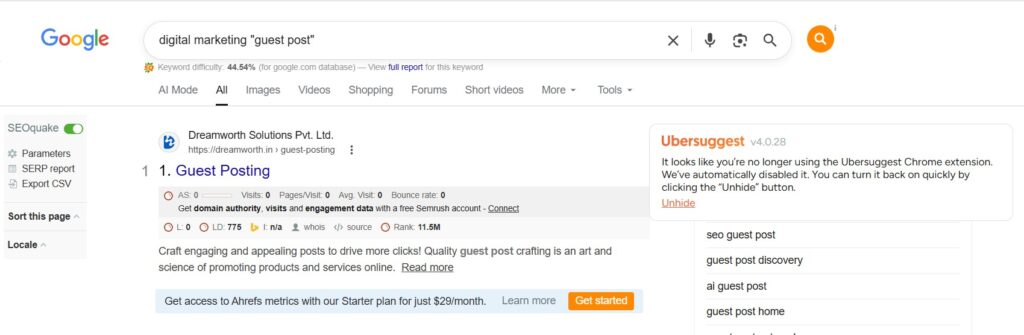
The advantages of guest blogging are:
- Building authority
- Expanding audience reach
- Strengthening industry relationships
The secret to effective guest blogging is to target quality sites as opposed to quantity sites.
3. Broken Link Building
Broken link building is an off-page SEO technique in which you locate broken links on other sites and propose your relevant content to replace them.

Broken links on a website often lead to 404 error pages, which negatively impact the user experience of the website. Therefore, by notifying the web owner of the broken link and proposing your content to replace it, you will be helping them fix their link, and in return, you will earn a valuable backlink.
This SEO technique is effective because it generates a win-win outcome for you and the website owner, who will benefit from the improved content on their website, and you will benefit from the backlink.
4. Digital PR
One of the most powerful off-page SEO techniques that have been used in recent years is Digital PR. It is based on acquiring media coverage, journalist mentions, and press features for your brand.
Some examples of Digital PR include:
- Publishing an industry research report
- Getting featured online
- Journalist outreach
- Press releases
Acquiring press mentions from respected sources can increase the trustworthiness of your site.
5. Social Media Marketing
Social media links may not have the power to transfer the authority for ranking, but the role of social engagement cannot be ignored for off-page optimization. Sharing, liking, or commenting on your content on social media increases the chances of getting natural links from other sites.

Benefits:
- Increased content visibility
- Increased opportunities to acquire backlinks
- Brand awareness
Well-performing content on social media sites has a good chance of attracting the attention of bloggers and journalists.
6. Influencer Outreach
Influencer Outreach is the process of reaching out to industry experts, bloggers, or influencers to promote your content or brand. Working with them will allow your brand to gain more exposure, credibility, and reach within your industry.

Influencers may:
- Share your content with their audience
- Offer product reviews
- Refer your brand to their articles/video content
These actions usually generate organic backlinks and brand awareness.
7. Forum and Community Participation
Forum and Community Participation entails being involved in online forums, discussions, and communities related to your industry. This helps you to gain credibility and expertise by answering questions and providing insights to other people in your industry.

Active participation in these communities helps increase brand awareness, build trust, and drive relevant traffic to your website.
8. Local SEO Citations
Local SEO Citations Participation is the process of listing your business’s name, location, phone number, and website (NAP) in online directories or business listings. This helps search engines verify your business information.

Citations include listings on:
- business directories
- review platforms
- local business listings
Consistent business information across directories helps improve local search visibility.
9. Content Marketing for Link Attraction
Content Marketing for Link Attraction is the practice of creating valuable, informative, and engaging content that naturally encourages other websites to link to it.
Helpful content like guides, research, or infographics encourages other websites to link to your page, helping you earn natural backlinks and improve search rankings.

Some of the best types of content include:
- industry studies
- detailed guides
- infographics
- data reports
- expert interviews
Valuable content has a natural tendency to attract links.
Advanced Off-Page SEO Strategies to Boost Rankings and Authority
Modern SEO extends beyond traditional link building. Several advanced signals are increasingly influencing search rankings.

1. Brand Mentions (Unlinked Mentions)
Search engines can recognize brand mentions even when they are not linked.
For instance, if your brand is frequently mentioned in blogs, news articles, and forums, the search engines will know this and will therefore view your website as authoritative.
Encouraging discussions about your brand will help boost your SEO.
2. Entity SEO and Knowledge Graph Optimization
Search engines now focus on entities rather than just keywords.
An entity is a brand, organization, or concept that is easily identifiable. If your brand is associated with a particular industry topic, search engines will view it as a trusted authority.
Optimizing your online presence across various platforms is also useful in this regard.
3. Topical Authority Through External Content
Examples of this include:
- Publishing thought leadership articles
- Contributing to industry publications
- Participating in roundups with other experts
These external references reinforce your expertise in a specific field.
4. Podcast and Webinar Appearances
Being a guest on a podcast or webinar is an underrated SEO strategy.
The benefits are:
- backlinks from the show notes
- increased brand authority
- access to new audiences
Being a guest on a podcast or webinar makes you an expert in your industry.
5. Community-Driven SEO
Online communities play a significant role in the visibility of a brand.
Engaging in:
- professional communities
- niche discussion groups
- industry forums
helps in creating authentic brand conversations and mentions on the web.
6. AI Search and Off-Page SEO
As search engines driven by AI continue to advance, they will increasingly rely on analyzing brand authority signals across the internet.
The brand authority signals include:
- Expert mentions
- Brand citations
- Media mentions
- External content references
Types of Backlinks You Should Know for Better SEO
You must understand that not all backlinks are the same. Knowing the types of backlinks can help you build a better backlink profile.
- Do Follow Links: Do Follow Links are backlinks that allow search engines to follow the link and pass SEO value (link authority) from one website to another. These links help improve a website’s search rankings and domain authority.
- No Follow Links: No Follow Links are backlinks that tell search engines not to pass ranking authority, but they can still bring traffic and support a natural backlink profile.
- Sponsored Links: Sponsored Links are backlinks that are paid for or used in advertisements, and they include a special tag to indicate that the link is part of a promotion or sponsorship.
- UGC Links: UGC Links are backlinks created through user-generated content, such as comments, forum posts, or community discussions. These links indicate that the content was added by users rather than the website owner.
- Editorial Links: Editorial Links are backlinks that are naturally added by editors or publishers within their content because they find the referenced content valuable and relevant.
- Profile Links: Profile Links are backlinks created by adding your website URL to profile pages on forums, social platforms, or directories.
Harmful Off-Page SEO Techniques You Should Avoid
The use of manipulative techniques will adversely affect your website and may lead to penalties.
Techniques to avoid:
- buying backlinks from spam networks
- private blog networks (PBNs)
- submitting links to low-quality directories
- automated link building tools
- excessive keyword-stuffed anchor text
Search engines favor natural and organic link building.
How to Build a Strong Off-Page SEO Strategy
Building a successful off-page SEO strategy requires more than just creating backlinks. It involves a planned and consistent approach focused on authority, relationships, and valuable content.
Step 1: Analyze Competitor Backlinks: Study your competitors’ backlink profiles to identify websites that are linking to them and discover new link-building opportunities.
Step 2: Find Link Opportunities: Look for relevant platforms such as guest blogging sites, industry blogs, directories, and resource pages where you can earn quality backlinks.
Step 3: Create Link-Worthy Content: Publish valuable content like guides, research articles, and case studies that others naturally want to reference and link to.
Step 4: Outreach and Relationship Building: Connect with bloggers, publishers, and industry experts to share your content and build long-term collaboration opportunities.
Step 5: Monitor Your Backlink Profile: Regularly track your backlinks to identify new links, lost links, or harmful links that may affect your SEO performance.
Step 6: Track Performance: Measure results through rankings, referral traffic, and domain authority to understand what strategies are working best.
Key Tools to Support Your Off-Page SEO Strategy
It is important to note that off-page SEO becomes quite easy when you have the right tools to support it. These tools will be quite handy for analyzing your backlinks, finding new link opportunities, brand mentions, and measuring your SEO performance.
Some of the tools that are commonly used for off-page SEO are:
- Ahrefs: This tool is quite handy for analyzing your backlinks, conducting competitor analysis, and finding new link opportunities.
- SEMrush: This tool is quite handy for tracking your backlinks, conducting competitor analysis, and measuring your SEO performance.
- Moz: This tool is quite handy for conducting link analysis, domain authority, and keyword research.
- BuzzSumo: This tool is quite handy for finding new link opportunities and influencers.
- Google Search Console: This tool is quite handy for tracking your backlinks and search performance.
Using these tools regularly helps you identify high-quality backlink opportunities, monitor your backlink profile, and continuously improve your off-page SEO strategy.
How to Measure Off-Page SEO Success
To evaluate your off-page SEO performance, monitor these key metrics:
- Referring Domains: This is the number of different websites linking to your site. More referring domains usually means better trust and authority in the eyes of search engines.
- High-Quality Backlinks: Focus on getting links from trusted, relevant websites instead of just increasing the total number of links. Quality matters more than quantity for SEO.
- Domain Authority Growth: Track your domain’s credibility and strength over time using tools like Moz or Ahrefs. Higher domain authority means your site is more trusted by search engines.
- Organic Traffic: Use Google Analytics to track how many visitors come to your site from search engines and see if your traffic is growing.
- Keyword Rankings: Track how your target keywords are performing in search results using tools like SEMrush to see if your SEO efforts are improving your rankings.
Regular monitoring helps you refine your strategy and focus on tactics that improve rankings and website authority.
The Future of Off-Page SEO
Off-page SEO is evolving as search engines focus more on trust, authority, and brand reputation, not just backlinks. Modern SEO also values how often a brand is mentioned and recognized across the web.
Here are some key trends shaping the future of off-page SEO:
- Stronger Focus on Brand Authority: Search engines are shifting their focus towards websites that showcase strong brand authority.
- Growing Importance of Digital PR: Being mentioned on news websites, blogs, and media outlets is going to become a key factor in defining a website’s authority.
- AI-Driven Search Evaluation: Search engines are using AI to evaluate websites, especially when it comes to assessing the quality, relevance, and authenticity of a site.
- Greater Emphasis on E-E-A-T: Search engines, especially Google, are placing a lot of emphasis on E-E-A-T signals to evaluate the quality of content.
- Value of Authentic Brand Mentions: Being mentioned across the internet, even without any link, is going to become a key factor in defining a brand’s reputation.
Businesses that focus on building authority, creating valuable content, and maintaining a strong online reputation will gain a significant advantage in the future of SEO.
Final Thoughts
Off-page SEO plays an important role in building your website’s authority, credibility, and long-term visibility in search engines. While on-page SEO helps search engines understand your content, off-page SEO shows that other websites and people trust your brand.
By focusing on high-quality backlinks, brand mentions, digital PR, and active community engagement, businesses can strengthen their online presence and improve their chances of ranking higher in search results.
Ultimately, successful off-page SEO is about creating valuable content, building genuine relationships, and maintaining a consistent long-term strategy that helps your brand grow naturally over time.