 seolounge
Social Media Agency vs In-House Team: Which is Better for Your Business?
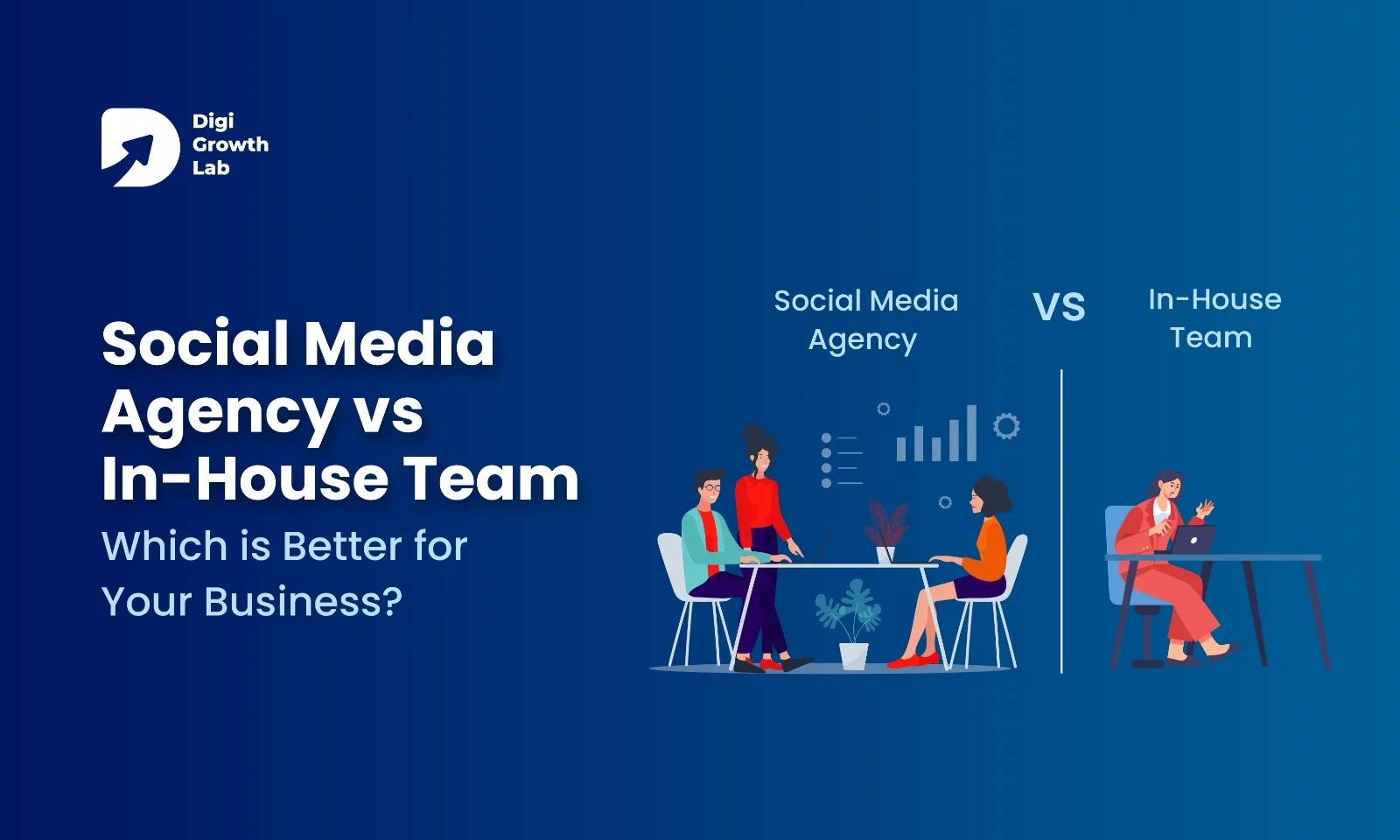
The decision to choose between a social media agency and an in-house team is no longer a straightforward hiring decision. For a vast number of companies, this decision has an immediate impact on brand visibility, lead quality, and long-term growth.
Social platforms are changing rapidly these days, algorithms keep changing, new content formats are constantly popping up, and audience expectations are changing almost every month. If your setup is not able to keep pace, then you will see a decline in results.
The majority of business owners are stuck in the same dilemma. On one hand, they think that an in-house team is easier to control and more connected with the brand, whereas on the other hand, an agency can provide the same work faster, has the experience, and a diverse range of skills. However, deciding based solely on cost or comfort often results in a loss of budgets and inconsistency in performance. The thing that matters the most is whether your current structure can provide you with stable engagement, measurable leads, and a clear return on investment.
This blog intends to assist you in making that decision with clarity.
Understanding What “In-House Social Media Team” Really Means
Most founders think an in-house social media team means better control and lower cost. That is only true when social media is treated as a support task, not as a growth channel.
An in-house setup works well when the goal is brand presence, basic engagement, and internal coordination. It starts to struggle the moment social media is expected to bring leads, sales, or measurable ROI. This shift happens faster than most businesses expect.
The real limitation is not effort or intent. It is an execution range. One internal team cannot test multiple content formats, platform trends, and campaign ideas at the same time without slowing down. When performance pressure increases, experimentation reduces, and posting becomes “safe” instead of effective.
Another issue founders face is internal friction. Social media needs fast decisions. In-house teams often wait for approvals, inputs from sales, or last-minute changes from leadership. This delays content and weakens impact, especially during launches or time-sensitive campaigns.
In-house teams also depend heavily on existing knowledge. Learning new platform changes takes time, and mistakes are part of the process. That learning cost is invisible but real. While the team is learning, growth stays flat.
In short, an in-house social media team is a good fit when consistency matters more than scale. If your business expects faster growth, wider reach, or performance-driven outcomes, this model alone usually hits a ceiling.
What a Social Media Agency Actually Brings to the Table
Most people think a social media agency means outsourcing posting work. That assumption misses the real value and it’s why many founders judge agencies incorrectly.
The real advantage is decision speed at scale. Agencies run multiple accounts across industries, so they see what formats, hooks, and posting patterns are working right now. While an internal team tests one idea at a time, agencies test dozens in parallel and apply winners quickly. This shortens the learning cycle.
There’s also a performance bias that internal teams rarely have. Agencies are judged on outcomes, not effort. That pressure changes how content is planned, topics are chosen based on engagement signals, not internal opinions. At Digi Growth Lab, we have observed that brands partnering with agencies typically adjust content strategy 2–3× faster than internal teams because feedback loops are tighter.
Another under-discussed benefit is specialist access without headcount risk. Instead of one generalist, agencies provide strategy, copy, design, video, and analytics as needed. Founders don’t have to hire, train, or replace talent when platforms or formats change.
Agencies also reduce execution blind spots. Internal teams often repeat what worked last quarter. Agencies track declining reach, creative fatigue, and platform shifts earlier because they see patterns across accounts. That awareness prevents slow drops in engagement that many businesses notice too late.
In short, agencies don’t just execute tasks; they remove delays, reduce trial-and-error cost, and keep social media aligned with current platform behavior.
Cost Reality Check: In-House vs Social Media Agency
Most cost comparisons fail because they look only at salaries or monthly retainers. The real cost difference shows up in time to results and waste, not line items.
Financial Breakdown: A Real-World Scenario
To illustrate the difference, let’s look at the annual cost of a standard mid-level setup versus a comprehensive agency partner.
Option A: The In-House Hire (Mid-Level Manager)
- Base Salary: $60,000
- Benefits & Taxes (approx. 20%): $12,000
- Tools & Software (Design, Scheduling, Analytics): $3,000
- Recruitment & Onboarding Costs: $2,500
- Total First-Year Cost: $77,500
Risk: If this person leaves or takes vacation, your marketing stops. You are paying nearly $80k for a single skillset.
Option B: The Social Media Agency
- Monthly Retainer (Strategy + Content + Execution): $4,000
- Tools & Software: $0 (Included)
- Recruitment & Training: $0
- Total First-Year Cost: $48,000
Advantage: For significantly less overhead, you gain access to a strategist, copywriter, designer, and video editor. Execution starts Day 1 with no downtime.
While an agency retainer might feel like a large monthly expense, the total annual cost is often 30–40% lower than hiring a full-time employee, with far less operational risk.
In-house cost reality
- One mid-level hire may look affordable, but effective output usually needs more than one skill.
- Add hidden costs: hiring time, onboarding, tools, training, and downtime during learning.
- In practice, many businesses spend months before seeing consistent performance. That delay has a cost, missed reach, missed leads, missed momentum.
Agency cost reality
- A social media agency spreads specialist costs across multiple clients, so you get strategy, creative, and analysis without a full-time headcount.
- Retainers often look higher upfront, but execution starts immediately. There’s no ramp-up phase.
- Faster testing reduces wasted spend. Fewer “learning months” means lower overall cost to reach stable results.
If your goal is steady posting, in-house may look cheaper.
If your goal is faster growth or measurable outcomes, agencies often cost less over time because they shorten the trial-and-error phase.
The real question isn’t “Which is cheaper per month?”
It’s “Which gets us to results with less delay and fewer wrong turns?”
The Hybrid Model: The Option Most Businesses Ignore
Most founders think the choice is binary: either hire internally or outsource everything. In reality, the hybrid model often delivers the best results when done right.
The hybrid setup works like this:
- Internal team owns brand voice, approvals, and business context
- External experts handle execution, testing, and optimization
This model solves a common problem. Founders want control, but they don’t want slow execution. A hybrid approach keeps decision-making close to the business while removing operational bottlenecks.
What makes the hybrid model effective is clear role separation. The internal team focuses on what they know best: product updates, customer insights, and brand direction. Execution-heavy tasks like content testing, format changes, and performance tracking are handled externally, often through a social media management service that already has systems in place.
Industry observations show hybrid teams adapt faster during growth phases. Businesses using this setup can scale content volume without increasing internal headcount. More importantly, campaigns don’t pause when internal teams are busy with launches, meetings, or sales priorities.
Where hybrid models fail is unclear ownership. If approvals, KPIs, and timelines are not defined early, speed drops. When roles are clear, this model offers flexibility without loss of control.
For growing businesses that need consistency and performance at the same time, the hybrid model is often the most practical middle ground, yet it’s still the least discussed option.
|
Feature |
In-House Team |
Social Media Agency |
Hybrid Model |
|
Primary Focus |
Brand control, internal coordination, and culture alignment. |
Speed, scalability, and measurable performance (ROI). |
Balancing brand control with rapid execution. |
|
Execution Speed |
Slower: Often delayed by internal approvals and lack of bandwidth. |
Fast: Can test dozens of ideas in parallel and apply winners immediately. |
Balanced: Internal team handles approvals; agency handles testing and posting. |
|
Expertise Access |
Limited: Often relies on generalists; learning new trends takes time. |
Wide: Instant access to specialists in strategy, copy, design, and video. |
Strategic: Internal team knows the product best; external team knows the platforms best. |
|
Cost Reality |
Hidden Costs: Salaries + training + downtime during the learning curve. |
Efficient: No ramp-up phase; retainers cover a full team of experts. |
Flexible: Scales content volume without increasing fixed internal headcount. |
|
Best For |
Businesses where brand consistency matters more than rapid growth. |
Businesses needing faster growth, leads, and diverse content formats. |
Growing businesses that want performance without losing brand ownership. |
Conclusion
There is no single right answer for every business. An in-house team works when social media supports the brand. A social media agency makes sense when speed, testing, and results matter. The hybrid model fits businesses that want control without slowing execution. The mistake is choosing based on assumptions instead of outcomes.
What matters is clarity. You need to know what role social media plays in your business today and what you expect from it six months from now. Growth problems usually come from the wrong setup, not from lack of effort.
At Digi Growth Lab, we don’t push one fixed model. We work as a flexible digital marketing agency that adapts to how your business actually operates. We can support your internal team, fully manage execution, or work in a hybrid setup where roles are clearly defined. The focus is always on results, not structure.
If you’re unsure which model fits your stage, that’s normal. The right choice becomes clear once goals, speed, and resources are evaluated honestly and that’s exactly where DGL helps businesses make better decisions.
FAQ
1. Is it a red flag if a social media agency asks for a 6–12 month contract upfront?
Not necessarily, but be cautious. Social media strategies (especially organic growth) often take 3–6 months to show compounding results. However, a reputable agency should offer a “probation period” (e.g., 90 days) or a clear exit clause if KPIs aren’t met. If they demand a year-long lock-in without a clear roadmap or trial phase, that is a red flag.
2. Can’t I just hire a freelancer or junior employee for $500–$1,000/month instead?
You can, but you get “task execution,” not strategy. A junior hire at that price point typically schedules posts and makes basic graphics. They rarely have the skills to analyze data, run paid ads, or pivot strategy when algorithms change. If your goal is just “keeping the lights on,” a low-cost freelancer works. If your goal is growth, you need the multi-skilled team an agency provides.
3. If I hire an agency, will I lose control over my brand voice?
This is the #1 fear founders have. The solution is the Hybrid Model. In this setup, your internal team (or founder) reviews and approves “Content Pillars” and “Tone of Voice” documents before a single post goes live. You maintain control over what is said, while the agency handles how and when it is distributed.
4. How much time does my internal team need to spend managing the agency?
Expect to invest 2–4 hours per week initially. This includes one weekly strategy call and time for approving content calendars. If you treat an agency as a “set it and forget it” solution, performance usually drops because they lack your business context. The best results come when you treat the agency as a partner, not a vendor.
5. What happens if I want to bring social media back in-house later?
A professional agency prepares you for this. They should build assets (ad accounts, pixel data, graphic templates) in your name, not theirs. Before hiring, always ask: “If we leave, do we keep the analytics history and creative files?” If they say no, do not hire them. You should always own your data.