A customer in India wants a good dental clinic. She does not scroll through ten blue links anymore. She opens ChatGPT and asks for the best clinic near her. The tool replies with three names. Your clinic is not one of them.
This is the new gap for small businesses. You can rank on Google and still be invisible when a buyer asks an AI tool for a recommendation. Google Search and AI search now work like two different shelves. Your business needs to sit on both.
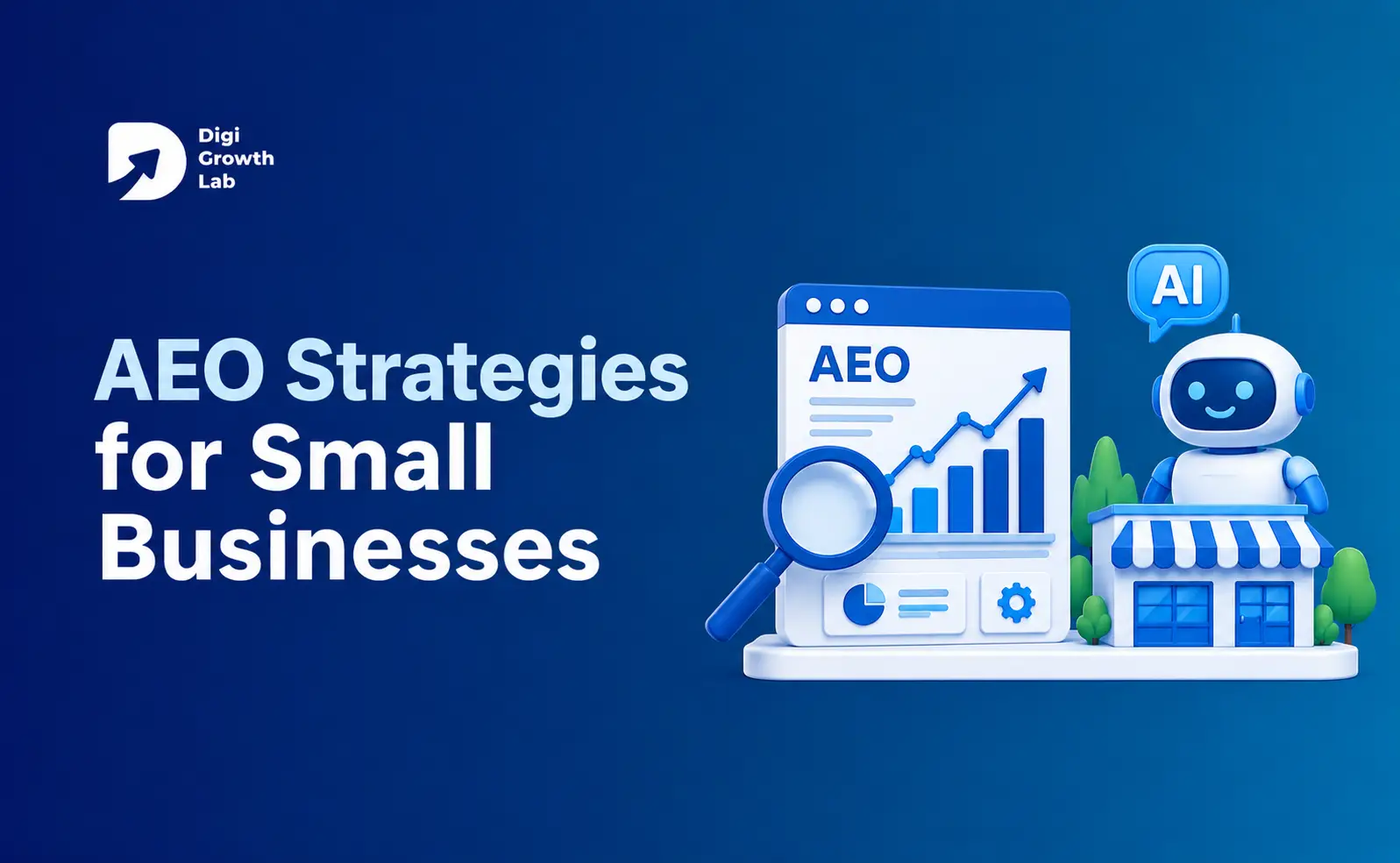
Answer Engine Optimization (AEO) is how you earn a place on that second shelf. It is the work of making your business easy for AI tools to find, understand, and name. These tools include ChatGPT, Google AI Overviews, Gemini, and Perplexity.
This guide gives you practical AEO strategies for small businesses. You will learn what AEO means and why it matters in 2027. You will see how to improve your chances of being mentioned in AI answers. You will also get ready test prompts, a plan for a small budget, and a 30 day roadmap you can start this week. The goal is simple. Help real buyers find you at the moment they ask an AI tool for help.
What Is Answer Engine Optimization (AEO)?
Answer Engine Optimization is the practice of shaping your content so AI tools can read it, trust it, and use it in their answers.
An answer engine is any tool that replies with a direct answer instead of a list of links. ChatGPT is an answer engine. So are Google AI Overviews, Gemini, and Perplexity. You ask a question in plain words. The tool reads many sources. Then it writes one clear answer, often with a few named sources.
These tools run on large language models. The models do not store the whole web. They pull fresh information from search indexes and public pages, then summarise it. So your page still needs to be found, crawled, and understood before it can appear in an answer.
AEO improves your odds in that process. It makes your pages clear, accurate, and easy to quote. It also builds the signals that help a tool trust your business, such as consistent details and genuine reviews.
Traditional SEO and AEO share the same foundation, but they aim at different results. SEO works to rank your page in a list of links. AEO works to get your business named inside a written answer. SEO wins a click from the results page. AEO wins a mention before the buyer ever sees a results page.
Here is a simple example. A plumbing company in Texas writes a clear page titled “Emergency drain cleaning in Austin.” The page answers common questions about cost, response time, and service area. Good SEO helps that page rank in Google. Good AEO helps ChatGPT name the company when someone asks for an emergency plumber in Austin. The same page can do both jobs when it is written for people first.
Why Is AEO Important for Small Businesses in 2027?
The way people search has changed fast. Many buyers now ask an AI tool before they open a normal search page. Some never reach the list of links at all. They read the AI answer and act on it.
The scale is large and growing. Google has reported that its AI Overviews reached more than 2 billion monthly users in 2025, and it raised that figure to 2.5 billion monthly users at Google I/O in 2026. This number is global, and it counts people who see AI summaries inside Google Search. Google also said its AI Mode search experience passed 1 billion monthly users in 2026.
ChatGPT has grown just as fast. OpenAI reported about 900 million weekly active users in February 2026, and it later confirmed the product passed 1 billion weekly active users during 2026. These figures are global and count weekly users of the whole product, not only search.
India is one of the fastest growing markets. OpenAI CEO Sam Altman said in February 2026 that India had reached 100 million weekly active ChatGPT users, which made it one of OpenAI’s largest markets. This figure is specific to India and was shared around the India AI Impact Summit in New Delhi.
Read these numbers with care. They measure how many people use these tools. They do not tell you how often a buyer acts on an AI answer, and they do not promise traffic to any single website. Still, the direction is clear. A large and rising share of search now happens inside AI answers.
For a small business, this creates both a risk and an opening. The risk is simple. If an AI tool never names you, a ready buyer may pick a competitor it does name. The opening is just as real. Many small firms have not done any AEO work yet. A clear, honest, well organised website can stand out while larger rivals are still slow to adapt. Local service providers gain the most, because buyers often ask AI tools for help “near me” and for a trusted local option.
AEO vs SEO vs GEO: What Is the Difference?
These three terms overlap a lot. Many experts use AEO and GEO to mean almost the same thing. It still helps to see how each one is framed. The table below gives a plain comparison.
| Point | SEO | AEO | GEO |
|---|---|---|---|
| Main goal | Rank your page in search results | Get your business named in a direct answer | Get your content used inside AI-generated content |
| How it works | Match keywords, earn links, win rankings | Answer clear questions, build trust and consistency | Give AI models clean, quotable, well-sourced content |
| Where you gain visibility | Google and Bing results pages | ChatGPT, AI Overviews, Gemini, Perplexity answers | Any AI tool that writes answers from live sources |
| Content you need | Keyword pages, blogs, service pages | Clear answers, FAQs, honest business details | Original facts, data, and clearly stated expertise |
| Example | Rank page one for “SEO company in Ahmedabad” | Be named when a buyer asks AI for an SEO company | Be the source an AI quotes for an SEO statistic |
| How you measure it | Rankings, clicks, impressions | Mentions, citations, referral visits | Citations and share of AI answers over time |
The key point is that these are not rivals. They are layers of the same work. SEO makes your site findable. AEO makes it answer the real questions buyers ask. GEO makes your content worth quoting. You do not need three separate teams or three budgets. You need one strong website and one honest content plan that serves people and machines at the same time.
Google itself supports this view. In its 2026 guidance for site owners, Google said its AI features are built on its core search ranking systems. So the SEO work you already do is the base for your AEO and GEO results, not a thing you replace.
How Do AI Search Engines Find and Choose Business Information?
No AI tool shares its full recipe. But the public guidance from Google, OpenAI, and Perplexity points to a general process. Here is how it tends to work.
First, the tool needs to reach your content. Your pages must be crawlable and open to the tool’s crawler. Google has been clear that its AI features use public, crawlable pages. If a crawler cannot read a page, that page cannot be used.
Second, the content must be indexed. Search indexes store what the crawler finds. Many AI tools pull from a search index, their own index, or both. If your page is not indexed, it is hard to surface.
Third, the tool looks for relevant and trustworthy sources. It tries to match the question to clear, accurate content. It tends to favour pages that answer the exact question well.
Fourth, the tool checks signals beyond your website. These include business listings, brand mentions on other sites, and genuine reviews. Public business information adds weight. When many sources agree about your business, a tool can trust the facts more.
Fifth, freshness and consistency matter. Up to date content signals that your information is current. Consistent details across your site, your Google Business Profile, and directories reduce doubt. Mixed or stale details create risk.
Two things are worth being honest about. Different platforms run different systems, so the same question can give different answers on ChatGPT, Gemini, and Perplexity. And no single factor guarantees a spot in any AI answer. You improve your odds. You do not buy a seat.
10 Practical AEO Strategies for Small Businesses in 2027
This is the hands on part. Each strategy below covers what it means, why it counts, and how to put it to work, with a quick example and the mistake to avoid.
1. Create Content That Directly Answers Customer Questions
AI tools look for pages that answer the exact question a buyer asks, in clear words. So write for the question, not around it.
Buyers type and speak in full sentences now. Your page should answer early, not after a long warm up.
List the questions people ask before they hire you. Turn each one into a heading. Answer it in the first line or two. Keep the extra detail below for anyone who wants it.
Say a real estate firm in Pune keeps getting asked about deposits. A page titled “How much deposit do I need to rent a flat in Pune?” with the answer right at the top does the work.
The usual slip is hiding the answer under a long intro. Lead with it instead.
2. Use Relevant Keywords and Natural Question Headings
Keywords still guide both search and AI tools. The shift is toward the way people actually speak.
People now search in longer, specific phrases. Short keywords on their own miss that.
Dig into the questions behind your keywords. Blend a plain keyword with a natural question. Put the terms where they read well, not in every line.
Picture the difference. “SEO company Texas” is the old style. “Which SEO company is best for a small shop in Texas?” is how people ask now. Cover both.
Where people go wrong is cramming keywords in. It reads badly, and it helps no one, human or machine.
3. Build Topic Authority With Supporting Blog Content
One page rarely makes you an authority. A connected set of pages does.
AI tools lean on sources that cover a topic well and often. Depth reads as real expertise.
Build one strong pillar page for each core service. Write supporting posts around it. Then link them together with clear anchor text.
Take an IT company. A pillar page on cloud migration, plus posts on cost, security, and timelines, all linked together, builds that authority.
The mistake here is writing lots of posts and linking none of them. On their own, they carry little weight.
4. Improve Your Website’s Technical SEO
AI tools cannot use a page they cannot reach. Technical health is the base of all AEO work.
Crawling, indexing, and speed decide whether your content is seen at all.
Check that key pages are indexed. Fix crawl errors. Improve page speed and mobile use. Keep navigation and internal links clean. Confirm your XML sitemap and robots.txt do not block important pages. A steady professional SEO services routine keeps these checks current.
One clinic might find its booking page blocked in robots.txt. Unblock it, and the page gets indexed again.
Treating technical SEO as a one and done task is a common error. It needs a regular look.
5. Add Accurate Business Information and Relevant Structured Data
Structured data helps machines understand your page. It describes your content in a format they read easily.
Clear data about your business, location, and articles helps machines read your page, and it still feeds traditional rich results.
Add Organization schema for your brand. Add LocalBusiness schema for your location. Use Article schema on posts and Breadcrumb schema for navigation. Just make sure the data matches what visitors actually see.
A home improvement firm, for instance, adds LocalBusiness schema with its real address, hours, and service area.
The trap is treating schema as a magic switch. Google has said there is no special AI markup, and schema alone earns no rankings or mentions. It adds clarity, nothing more.
6. Strengthen Your Google Business Profile and Local Presence
Your Google Business Profile is a trusted public record of your business. AI tools and buyers both read it.
Accurate local details feed local search and build trust in your business.
Fill in every field. Pick the right categories. Write clear service descriptions. Add your real location and service area. Ask for genuine reviews and reply to them. And keep your name, address, and phone number identical everywhere.
A dental clinic in Bengaluru, say, keeps the same address and phone across its site, its profile, and local directories, with nothing out of step.
What hurts most is a half filled profile, or details that quietly go out of date.
7. Build Brand Credibility Through Relevant Online Mentions
AI tools weigh what other sites say about you. Honest mentions build trust.
When other sites name your business, that carries weight your own website cannot give itself.
Write useful guest articles for real industry publications. Offer honest expert commentary. Get listed in directories that matter. Build genuine partnerships in your field.
A Mumbai marketing agency quoted in a trade publication about local SEO, for example, picks up a credible mention.
Steer clear of bought backlinks, fake reviews, and paid mentions. They carry real risk and can cost you trust.
8. Publish Original Research, Case Studies, and Real Examples
Original content is hard to copy and easy to cite. It sets you apart.
AI tools value first hand insight, real data, and honest examples far more than generic text.
Share what you learn on the job. Publish a small survey, an anonymised result, or a clear case study. Explain your process in your own words.
An online store might publish a short study on how faster shipping changed its repeat orders, with real numbers behind it.
Never invent results. Share only what is true and what you can stand behind.
9. Keep Your Website Content Accurate and Updated
Stale content hurts trust. Current content supports it.
Accurate details help buyers decide, and they help tools rely on your pages.
Review service descriptions, pricing where you show it, and business details on a set schedule. Add clear author information. Refresh old statistics and drop claims that no longer hold. Keep supporting pages current.
A SaaS firm, for instance, updates its pricing page the day its plans change, so no page ever shows the old price.
The error is letting pages sit untouched for years while the business moves on without them.
10. Track Your AI Search Visibility and Improve Your Strategy
You cannot improve what you do not measure. AEO needs its own tracking.
Steady measurement shows what is working and where to look next.
Watch your brand mentions, AI citations, referral traffic, impressions and clicks, keyword rankings, leads, and conversions. Google Search Console covers impressions and clicks. Google Analytics 4 covers traffic and conversions. Semrush or a similar tool covers rankings. For the rest, ask AI tools the questions your buyers ask and note what comes back.
A consultant might check five buyer questions in ChatGPT and Perplexity each month and log whether the business shows up.
Do not lean on one method alone. Every tool has blind spots. Search Console will not show AI citations, and manual checks swing from day to day. Read them together.
Why Is Your Business Not Appearing in ChatGPT Recommendations or AI Search Results?
This is the question many owners ask first. The honest answer is that several causes can combine. Blaming one factor rarely solves it. Here are the common reasons and what to check.
| Possible problem | What to investigate | Recommended action |
|---|---|---|
| Pages are not indexed | Check Google Search Console coverage | Fix crawl blocks, submit the sitemap, request indexing |
| Service pages are vague | Read your pages as a new buyer would | Rewrite them to explain the service, location, and value clearly |
| The site has thin content | Count pages that answer real questions | Add useful pages and FAQs around each core service |
| Competitors are more visible | Search your key questions in AI tools | Study who appears and what they cover that you do not |
| Business details are inconsistent | Compare site, profile, and directories | Make the name, address, and phone number match everywhere |
| Few third party mentions | Search for your brand across the web | Earn honest mentions in real industry sources |
| Content is generic | Review your pages for original value | Add first-hand insight, examples, and clear expertise |
Avoid one trap here. Not every missing AI mention is caused by weak backlinks or low domain authority. A new site with clear, honest, well organised content can appear, while an older site with vague pages may not. Start with the basics. Confirm your pages are indexed, clear, and consistent. Then build from there.
How to Check Whether Your Business Appears in AI Search Results
You do not need a paid tool to start. You need a simple, repeatable test. Follow these steps.
- Open each tool you want to test: ChatGPT, Google AI Overviews, Gemini, and Perplexity.
- Ask the real questions your buyers ask, in plain words.
- Note whether your business is named in the answer.
- Note whether a competitor is named.
- Note which sources the tool cites.
- Check whether the facts about you are correct.
- Repeat the same question a day later to see if the answer changes.
Here are ten prompts you can test today. Swap in your own city and service.
- Best SEO agencies for small businesses in Ahmedabad.
- Which digital marketing agencies help startups in Gujarat?
- Affordable SEO companies for small businesses in Texas.
- Which SEO agencies specialise in ecommerce websites?
- Best digital marketing services for small IT companies in California.
- Who are the top plumbing companies in Houston?
- Recommend a dental clinic in Bengaluru that takes new patients.
- Which law firms in New York help small businesses with contracts?
- Good real estate agents for first time buyers in Chennai.
- Affordable web design companies for small shops in Florida.
Record each result in a simple table. The one below works well.
| Prompt | Tool | Your business named? | Competitor named? | Sources cited | Facts correct? |
|---|---|---|---|---|---|
| Example question | ChatGPT | No | Yes | Competitor site, a directory | Not tested |
| Example question | Perplexity | Yes | Yes | Your site, a review page | Yes |
Keep one thing in mind. AI answers shift by query, location, time, and platform. The same question can name different businesses on different days. So test more than once, and watch the pattern over weeks, not the result of a single try.
How to Identify Competitors Appearing in AI Answers and Find Content Gaps
When an AI tool names a competitor and not you, that is useful data. It shows what the tool trusts right now. Here is a simple process to learn from it.
- Identify the competitors that appear in relevant AI answers.
- Record their website and the sources the tool cites.
- Review their service pages and how they explain each service.
- Compare their supporting content, such as blogs and FAQs.
- Identify questions they answer that your website does not.
- Find the directories and publications that mention them.
- Create genuinely useful content that fills the gaps you found.
Tools can speed this up. Semrush and similar research tools help you see competitor keywords, content, and backlinks. Google Search itself shows the People Also Ask questions and related searches that reveal buyer intent.
Here is a short example. You run a small SEO agency. You ask an AI tool for the best SEO agency for a startup in your city. It names a competitor and cites their blog on SEO for startups. You review that blog. You notice they answer questions on cost, timelines, and reporting. Your site covers none of these clearly. So you write honest pages that answer the same questions in your own words and from your own experience.
A fair warning here. Do not claim an AI tool recommends a competitor unless you have tested it and seen it yourself. Answers vary, so record what you actually find rather than guess.
AEO Strategies for Small Businesses With a Limited Marketing Budget
You do not need a large budget to begin. Much of the early work is free. It just takes time and care. Start with the tasks that cost nothing and carry the most weight.
Free things to do first: research buyer questions using Google suggestions, People Also Ask, and related searches. Set up and study Google Search Console. Complete your Google Business Profile in full. Improve your most important service pages. Add clear internal links between related pages. Ask happy customers for genuine reviews. Join relevant industry groups and discussions. Run manual AI visibility checks each month.
The table below shows what you can do yourself and where paid help often speeds things up.
| Activity | Free to do yourself | May need professional support |
|---|---|---|
| Keyword and question research | Yes, with free tools | Faster with Semrush or similar |
| Google Business Profile setup | Yes | Only for large multi-location brands |
| Service page improvements | Yes, with effort | Helpful for scale and quality |
| Technical SEO fixes | Basic checks yourself | Yes, for crawl, speed, and schema work |
| Content production | Yes, if you can write | Helpful for volume and consistency |
| Structured data setup | Simple types yourself | Yes, for complex or large sites |
| AI visibility tracking | Manual checks yourself | Useful for ongoing monitoring |
Prioritise by impact and effort. Fix indexing and clarity first, because they unlock everything else. Then complete your profile and improve your top pages. Save paid help for the tasks that are slow or technical, such as a full technical audit or steady content production. When budget allows, a mix of organic work and paid campaigns like pay-per-click management can bring leads while your AEO results build over time.
How to Optimize Your Website for ChatGPT, Gemini, Perplexity, and Google AI Overviews
Each platform works a little differently. The base work is the same. Clear content, open access, and consistent business facts help everywhere. The notes below add what matters for each tool. Remember that no platform guarantees inclusion, and none offers a special submission trick.
How to Improve Your Website’s Visibility in ChatGPT
ChatGPT can pull live information from the web when it searches. So your pages need to be public and easy to read. Write clear answers to the questions buyers ask. Keep your business details consistent across the web. Make sure your site does not block the crawler if you want to be found. For current rules, follow OpenAI’s own documentation, since its search behaviour continues to change.
How to Improve Visibility in Google AI Overviews
AI Overviews are built on Google’s core search systems. So strong SEO is the base. Make sure key pages are indexed. Create helpful, people first content that answers the question well. Keep your technical SEO healthy. Google has said the single biggest factor is unique, useful content, not special markup. Follow Google’s official guidance for site owners on AI features.
How to Improve Visibility in Gemini
Gemini draws on Google’s search and content systems. The same SEO fundamentals apply. Clear content, good indexing, and consistent business information help. There is no separate Gemini markup to add. Keep your site healthy for Google Search and follow Google’s relevant documentation.
How to Improve Visibility in Perplexity
Perplexity cites its sources openly in most answers. It favours content it can read cleanly and cross check against other sources. So clear structure, direct answers, and honest third party mentions help. Keep your pages open to its crawler if you want to be cited. Follow Perplexity’s own guidance, since it updates its approach over time.
A final point ties these together. Do not assume all four tools rank or recommend the same way. Test each one with your own buyer questions. Then improve the pages and signals each tool seems to trust.
Local AEO: How Businesses in India and the USA Can Improve AI Search Visibility
Local buyers ask AI tools for nearby help. A clear local presence helps you appear. The approach differs a little by market, so here are separate notes for India and the USA.
AEO for Local Businesses in India
Indian buyers often name a city or an area in their question. So your local details must be exact and consistent.
Start with your service area. State the cities and neighbourhoods you cover in plain words. A clinic in Ahmedabad should name Bopal, Satellite, and nearby areas on its page. Create location pages only where you truly serve, not for every city.
Build your Google Business Profile with correct categories, hours, and photos. Collect genuine reviews from local customers, since buyers in Mumbai and Delhi often read them before they choose. Add local content that answers real questions, such as typical costs in rupees and service timelines. A strong local setup, backed by steady SEO services in Ahmedabad style work, helps both Google and AI tools trust your business. In Bengaluru and Chennai, consistent details across directories matter just as much as the website itself.
AEO for Local Businesses in the USA
American buyers often ask for a service in a city or state. So your pages should match that intent.
Build clear service area pages. A plumbing company in Texas should explain which parts of Houston or Austin it covers. A law firm in New York should name the practice areas and the boroughs it serves. Keep this honest and specific.
Strengthen your local business information everywhere it appears. Answer the questions buyers ask before they call, such as pricing, licensing, and response time. Build credibility with real reviews and honest mentions on trusted local sites. In California and Florida, where competition is high, location specific content and genuine customer proof often decide who an AI tool names. In Illinois, a clear Chicago service page with real detail tends to outperform a thin page that lists the whole state.
Common AEO Mistakes Small Businesses Should Avoid
Many AEO problems come from avoidable mistakes. Here are ten to watch for, with a quick fix for each.
- Publishing generic AI written content with no review. Fix it by editing every draft and adding your own insight.
- Stuffing keywords into pages. Fix it by writing for people and placing terms where they read well.
- Creating empty location pages for cities you do not serve. Fix it by making pages only for real service areas.
- Ignoring traditional SEO. Fix it by keeping your technical and content basics strong, since AI features build on them.
- Using inaccurate business information. Fix it by keeping your name, address, and details correct and consistent.
- Buying fake backlinks and paid mentions. Fix it by earning honest mentions in real sources.
- Publishing unverified statistics. Fix it by checking every number against its original source and dating it.
- Expecting instant AI visibility. Fix it by treating AEO as steady work that builds over months.
- Ignoring indexing issues. Fix it by checking Search Console and fixing crawl and index errors.
- Treating schema as a shortcut to AI rankings. Fix it by using schema to describe real content, not to game results.
The pattern is clear. Shortcuts and tricks tend to fail. Honest, clear, consistent work tends to last.
How Long Does AEO Take to Show Results?
There is no fixed timeline. Results depend on your starting point and your market. Several factors shape the pace.
Website age affects trust, since newer sites often take longer to build a track record. Existing search visibility helps, because a site that already ranks has a head start. Industry competition matters, as crowded markets are harder. Content quality is a major factor, since useful, original content moves faster. Technical SEO sets the floor, because a site that cannot be crawled will not appear. Business credibility helps, as honest mentions and reviews build trust. Consistency of effort decides the long run, since steady work beats a single push.
It helps to separate two things. Implementing AEO improvements is quick. You can fix indexing, rewrite pages, and complete your profile in weeks. Seeing measurable outcomes takes longer. AI tools need time to crawl, trust, and reflect your changes, and their answers shift on their own.
So set honest expectations. Do your work well and track the signals. Do not promise yourself fixed rankings, a set number of citations, or a flood of leads by a certain date. AEO is a steady practice, not a quick switch.
30-Day AEO Implementation Plan for Small Businesses
This plan gives you a clear first month. It is built for a small team with limited time. Each week has one focus.
| Week | Main focus | Activities | Expected output |
|---|---|---|---|
| Week 1 | Audit and baseline | Review the site, check indexing, study competitors, run your first AI visibility test | A clear list of gaps and a record of where you stand today |
| Week 2 | Fix the base | Improve key service pages, correct business details, fix technical SEO, tidy content structure | Stronger, clearer pages that are indexed and consistent |
| Week 3 | Build useful content | Write helpful answers, add internal links, improve your local presence, earn honest mentions | New content and signals that support your core services |
| Week 4 | Test and plan ahead | Test AI visibility again, review competitor gaps, check performance, plan the next steps | A measured result and a focused plan for month two |
Keep it realistic. Pick a few high impact tasks each week rather than trying to do everything. Finish what you start before you move on.
Be clear about what 30 days means. It is a starting plan, not a guaranteed ranking period. You will not control when AI tools reflect your work. What you can control is the quality of the base you build this month, which makes every later month easier.
AEO Checklist for Small Businesses in 2027
Use this as a quick self audit. Tick each item once it is true for your business. or all of your marketing.
- Your important pages are indexed in Google
- Your service pages explain each service, location, and value clearly
- Your content answers the real questions buyers ask
- You have researched the questions and keywords buyers use
- Related pages link to each other with clear anchor text
- Your business name, address, and phone number match everywhere
- Your structured data matches what visitors see on the page
- Your Google Business Profile is complete and current
- You have genuine reviews and honest third party mentions
- You have reviewed which competitors appear in AI answers
- You test your AI visibility on a regular schedule
- You measure impressions, clicks, leads, and conversions
If most boxes are unticked, start at the top. Indexing and clear pages come first. The rest builds on them.
Final Thoughts: Start Improving Your AI Search Visibility
AI search is not a reason to abandon SEO. It is a reason to do SEO well and extend it. The same work that helps you rank also helps AI tools find and trust you.
Keep your focus simple. Publish useful content that answers real questions. Keep your technical SEO healthy. Build honest credibility with reviews and real mentions. Keep your business information accurate. Then improve a little each month and measure what works.
You do not need a huge budget to begin. You need clear priorities and steady effort. Start with the free work this week. Fix your indexing, clarify your top pages, and run your first AI visibility test. Build from there.
If you would like expert help, Digi Growth Lab works with small businesses in India and the United States on exactly this. You can explore our digital marketing services or get in touch to talk through a plan that fits your goals and your budget.
Your competitors show up in AI search. Do you?
Get a free check of your AI visibility and the gaps to close.
Frequently Asked Questions
How do I optimize my website for Google AI Overviews?
Start with solid SEO, because AI Overviews run on Google’s core search systems. Make sure your key pages are indexed. Write helpful content that answers the question for a real person. Keep your technical SEO healthy. Google has said useful, original content matters more here than any special markup.
Is AEO important for local businesses?
Yes, often more than for big national brands. People ask AI tools for help near them, like a plumber in their city or a clinic that takes new patients. Clear service areas, a complete Google Business Profile, and genuine reviews make you much easier to name. Local trust signals carry real weight here.
Does AEO help websites rank on Google?
In most cases, yes. A lot of AEO is just good SEO and genuinely useful content. That same work helps you rank in normal search and helps AI tools trust you. You rarely have to choose between the two.
Do small businesses need a separate AEO strategy?
Not a separate team or budget. You need one plan that pulls SEO, clear answers, and trust signals into the same effort. Treat AEO as a layer on top of solid SEO, not a project that runs beside it.
How much does AEO cost?
There is no fixed price. Much of the early work costs nothing but your time, like fixing your profile, clarifying your pages, and running AI checks. Costs rise when you add paid tools, a technical audit, or steady content help. So you can start small and spend more only where it pays off.
Can a new website appear in AI search results?
Yes, it can. A new site with clear, honest, well organised pages can get named in AI answers. It usually takes longer to build trust than an older site, so give it time and keep the quality high. A clean, focused new site often beats an old, neglected one.