
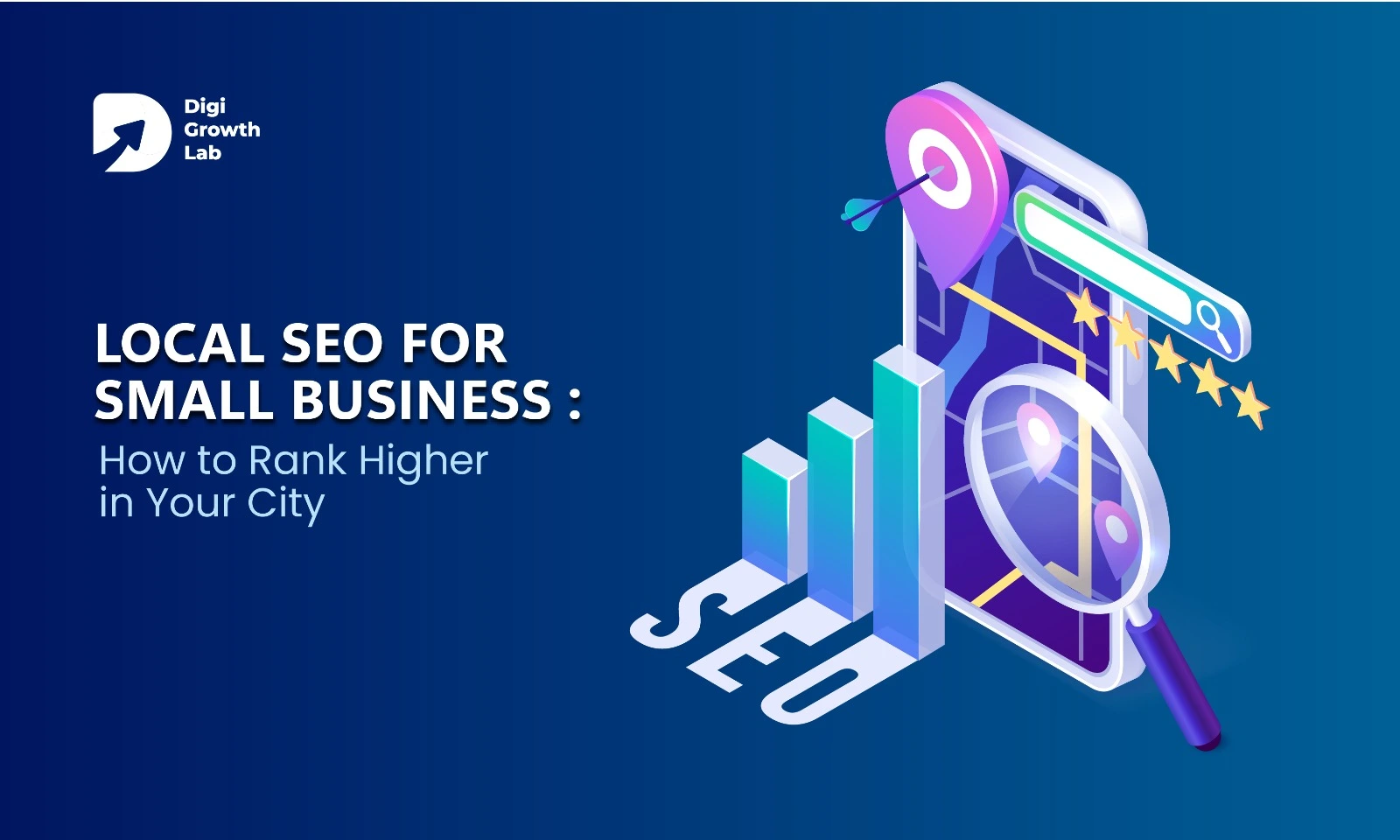
Search has changed how people find local businesses. They rarely type long phrases anymore. They search “near me” or “open now” and expect a nearby answer in seconds.
Here is the plain version. Local SEO is the work of getting your business found when people nearby search for what you sell. It covers your Google listing, your reviews, your website, and the local signals Google reads to decide who shows up.
For a small business, that shifts the game. You are not only up against the shop down the road. You are up against Google’s AI answers, voice search, and results that change from one block to the next.
This guide goes past the basics. It shares the same moves we use in our local SEO services to help small businesses win their city’s search results.
How Google Decides Who Ranks Locally
Before the tactics, understand one thing. Google ranks local results on three factors.
- Relevance. How well your business matches what someone searched for.
- Distance. How close you are to the person searching.
- Prominence. How known and trusted your business looks, based on reviews, links, and mentions.
You cannot move your shop closer to every searcher. But you can improve relevance and prominence. That is where the work below pays off.
You will also hear about the map pack. That is the group of three businesses Google shows at the top of local results, with a small map. Those three spots get most of the clicks and calls. Landing in that pack is the goal of local SEO.
What Has Changed, and What Still Works
Local SEO does not sit still. If you only claim a profile, add a few listings, and wait, you are already behind. Here is what is different now.
Google’s AI answers sit above the results
Google now shows AI answers at the top of many local searches. It pulls from profiles, reviews, and FAQ-style content. Often the searcher gets what they need without clicking a single website.
What to do: add a short FAQ to your site with clear, spoken-style answers. Keep your Google Business Profile current. Both raise your odds of being named in those AI answers.
Your ranking changes block by block
You are not simply “number one in the city.” You might rank first in one neighborhood and be invisible a few streets away. Google tailors results to the searcher’s exact spot. Map-tracking tools show this clearly.
What to do: build a page for each area you serve. A plumber can have one page for one neighborhood and another for the next. Add local photos, directions, and landmarks so each page feels real.
Many searches end without a click
Around 60% of Google searches in the US now end without anyone clicking through to a website, based on SparkToro’s 2024 zero-click study. People get hours, directions, reviews, and answers right on the results page.
What to do: treat your Google Business Profile like a second home page. Add services, a menu or product list, real photos, and weekly posts. Give people a reason to act inside Google, even if they never reach your site.
What still works, and always will
- Keep your name, address, and phone number identical everywhere they appear.
- Earn honest, detailed reviews.
- Get listed on trusted local directories, and win links from local sites.
- Keep your website fast on phones.
These still matter. On their own, though, they only get you halfway. The AI answers, the block-by-block shifts, and the click-free searches are where the real edge is now.
Google Business Profile: Moves Most Businesses Skip
For most small businesses, your Google Business Profile is the first thing a customer sees. Filling it in is the floor, not the finish. Treat it like a working storefront.
Track real results, not just views
Do not stop at “how many people saw my profile.” Add tracking tags to the links inside your profile: the website button, the booking link, the menu link. Now you can see how many calls and bookings actually came from your profile inside your analytics. That turns a vanity number into proof.
Use posts like small campaigns
Most businesses ignore Google posts. Use them. Promote a seasonal offer. Share a quick behind-the-scenes update. Add a clear next step like “Call now to book.” Google favors profiles that stay active.
Show real photos and video
Stock images do not build trust. Upload real photos and short clips of your team, your space, and your work. Show a local touch, like your storefront sign or a nearby landmark. People want to see a real business.
Fill your Q&A yourself
The Questions and Answers box often sits empty. Do not wait for questions. Add the ones customers always ask, with clear answers. “Do you offer same-day service?” “Which areas do you cover?” “Is there parking?” These often show up right in search.
Let people act without leaving
Every extra click can cost you a customer. Turn on messaging, booking, and a service menu. If someone can message you, book, or browse without leaving Google, you remove friction and win more of them.
A full profile does more than show up. It captures the customer at the moment they decide.
Reviews That Do More Than Rank
Reviews are more than the stars beside your name. They shape how often you appear, how people choose you, and how much they trust you. Only about 4% of consumers say they never read reviews, per BrightLocal’s 2025 survey. Most check more than one source before they decide. A strong review habit sets you apart.
Build reviews into the job
Do not ask at random. Make it part of how you work. Send a friendly follow-up after a sale. Add a small card with a QR code at checkout. Train staff to mention it after a job well done. Routine beats luck.
Ask for detail, not just stars
One review that says “best dentist downtown, same-day appointment” helps more than five that say “Great.” Detailed reviews build trust and drop natural local keywords into your profile. Nudge customers to name the service, the location, and why they would come back.
Reply in a way that builds trust
Most businesses ignore reviews or reply “Thanks.” That is a waste. For good reviews, reply personally, and by name where you can. For bad ones, show you care, own what went wrong, and explain how you are fixing it. Future customers read these replies. Google notices the engagement too.
Put reviews to work elsewhere
Do not let great reviews sit on Google alone. Add strong quotes to your site and service pages. Share them on social media. Use them in brochures. Reviews can feed your reputation and your marketing at the same time.
Earn reviews with small moments
Reviews are earned, not owed. A surprise upgrade. A thank-you note. A quick check-in after the job. These small touches turn happy customers into people who write about you.
Managed well, every customer becomes a possible advocate. That carries more weight than any ad.
Find the Local Keywords Worth Targeting
Good local SEO starts with the words your customers actually type. Guessing wastes effort.
Start simple. Write down how a customer would describe what you do, then add your area. “Emergency plumber in your area.” “Bridal makeup near me.” Free tools like Google’s Keyword Planner, and the terms Google suggests as you type, show you real searches and rough demand.
Look for intent, not just volume. “Plumber near me” and “24 hour plumber” point to someone ready to call now. Those beat broad terms with no local pull. Build a short list of these. Then use them in your page titles, your content, and your Google Business Profile.
Content That Wins AI and Voice Searches
People no longer only type. They ask Google, Siri, and Alexa out loud. If your content does not match how people actually ask, you miss those leads. This is where a strong AI SEO approach helps.
Write the way people speak
Voice searches are longer and sound like questions. Typed: “dentist near me.” Spoken: “Where’s a dentist open right now near me?” Add an FAQ that answers real questions, starting with who, what, where, and how much.
Give short, direct answers
AI answers and voice assistants like clear, short replies. Skip the long wind-up. “Yes, we serve vegan dishes, including salads, pasta, and plant-based burgers” beats a full paragraph. For each service, write a two to three sentence answer to the most common question about it.
Tie content to local life
Fresh, local content gets picked up more often. A cleaning service can write about getting a home ready before the rainy season. A café can write about the best spots during a local festival. Build a simple calendar around your city’s seasons and events. This earns shares and links too.
Use clear local signals
Generic content does not rank. Name nearby landmarks. List the areas you serve. Use the words locals use, not just “near me.” Write pages that speak to a specific community.
Help machines read your details
Google’s AI and voice tools rely on structured details to understand you. In plain terms, that is a bit of code that labels your hours, services, and prices so search engines read them cleanly. Use it for your key business details. Format your FAQs with clear headings. Keep answers short, under fifty words where you can, so they fit a voice reply.
Profile Mistakes That Quietly Hurt You
Even seasoned specialists can break Google’s rules by accident. Break them, even without meaning to, and you risk a drop or a suspension. Here are the common slips.
Stuffing keywords in your business name
The slip: adding keywords or a city to the name field, like “Joe’s Plumbing Best Plumber Dallas.” Why it hurts: Google only allows your real business name, the one on your sign and legal papers. Do this instead: use the real name only. Put keywords in your description, posts, and website.
Making duplicate listings
The slip: creating extra profiles to cover more areas or claim more map spots. Why it hurts: Google reads this as spam and can flag or suspend them. Do this instead: one profile per real location. Cover wider areas with the service-area setting.
Using a fake address
The slip: listing a coworking desk, a P.O. box, or a virtual office to appear in more cities. Why it hurts: Google wants real, staffed places where customers can meet you. Do this instead: use only real, staffed addresses. If you visit customers, hide the address and set your service areas.
Choosing the wrong categories
The slip: picking broad or off-topic categories to show up in more searches. Why it hurts: it confuses users and weakens your relevance. Do this instead: one clear main category, a few accurate extra ones, and useful attributes like “wheelchair accessible.”
Posting off-topic or stuffed updates
The slip: keyword-stuffed posts, or promotions that have nothing to do with your business. Why it hurts: Google removes low-quality posts and may penalize the profile. Do this instead: post real updates, offers, and helpful notes. Keep them honest and useful.
Ignoring reviews and questions
The slip: leaving reviews unanswered, deleting bad ones, or skipping customer questions. Why it hurts: Google values engagement, and customers read silence as a red flag. Do this instead: reply to every review, good or bad, and keep your Q&A current.
Following Google’s rules is not only about dodging penalties. It builds trust and keeps your profile working at its best.
Track Results That Actually Matter
Most businesses, and plenty of agencies, stop at “we ranked number one” or “traffic went up.” Rankings do not pay the bills. What counts is whether local SEO brings real customers and revenue. Here is how to track it honestly.
Connect actions to real sales
Your profile shows calls, messages, and direction requests. Few businesses link those to actual jobs won. Match your calls and leads to closed sales, not just enquiries. That is your real return.
Value quality, not just volume
A pile of leads means little if they are low value. A dentist booking one big treatment can be worth more than ten quick questions. Track what a customer is worth over time, not only how many came in.
Watch your missed calls
You can win leads through search and still lose the sale by missing the call. This hits home services and restaurants hardest. Track missed calls next to call volume. Fixing how you answer the phone can lift your return without spending a rupee more on SEO.
Use tracking links on offers
When you post an offer on your profile, add a tracking tag to the link. Then you can see the clicks and bookings it drove inside your analytics. Without it, you are guessing whether the post worked.
Count repeat customers
Local SEO wins new customers and brings old ones back. Returning customers usually cost less to win and spend more over time. Tag first-time customers who found you on Google. Track how many return. That shows the value building month after month.
Rankings are only half the story. Real return shows up as calls answered, jobs booked, and customers coming back. Most competitors never connect those dots. That is your opening.
How Much Does Local SEO Cost?
There is no single price. What you pay depends on how much you take on yourself and how competitive your market is.
You have three broad routes.
- Do it yourself. The cheapest option. You pay only for basic tools and your own time. It can work for a single location in a quiet market, but it is slow.
- Hire a freelancer. A middle path. Fine for one location or a tight budget, though cover can be thin when they are busy.
- Work with an agency. The highest cost, and usually the fastest and most complete. You get a team across your profile, reviews, content, and tracking.
A few things push the price up: more locations, a crowded market, and a bigger content and link plan. Where you are based matters too. Rates in India, for example, usually sit well below US or UK agency rates. Whichever route you pick, ask what the monthly fee includes and how results are reported, so you can compare like for like.
How Long Does Local SEO Take?
Local SEO is not a one-month job. Be wary of anyone who promises instant top spots.
In most cases, a well-set Google Business Profile and clean listings can move your Maps and map pack rankings within thirty to ninety days. Gains from content and links on your website usually build over three to six months. The businesses that own their market are the ones that kept at it, not the ones that ran a single burst and stopped.
Where DGL Fits In
Local SEO today goes beyond a checklist of citations or your city name stamped on every page. It means showing up where customers search, proving you are trustworthy, and making it easy to choose you.
We have covered advanced profile moves, honest reviews, local content, and content built for voice and AI. We have also covered how to measure what matters: calls answered, jobs booked, and customers returning.
Keeping up with all of this can feel like a lot. That is where a partner helps. At Digi Growth Lab, we help local businesses simplify and strengthen their online presence. We follow Google’s rules, apply the moves most competitors miss, and tie every effort back to growth you can measure. See how our SEO services work.
Want More Calls From Your City?
Send us your Google Business Profile and the areas you serve. We will show you where you are losing local visibility, and the first fixes that would bring more calls.
Frequently Asked Questions
What is the difference between SEO and local SEO?
Regular SEO works to rank you for searches anywhere, often across a whole country. Local SEO focuses on searches tied to a place, like “near me” or a city name. It leans on your Google Business Profile, reviews, local listings, and map visibility. Most small businesses need local SEO first.
How long does local SEO take to work?
Most businesses see movement in Maps and the map pack within thirty to ninety days after fixing their Google Business Profile and listings. Bigger gains from website content and links usually take three to six months to build. Local SEO rewards steady work, not one-time bursts.
What is the Google map pack?
It is the group of three businesses Google shows at the top of local results, with a small map. Those three spots capture most of the clicks and calls, so getting into the pack is the main goal of local SEO.
Do online reviews affect my local ranking?
Yes. Reviews are one signal Google uses to judge how trusted your business is, and they strongly influence which business a customer picks. Steady, detailed reviews and genuine replies help both your ranking and your reputation.
Do I still need a website if I have a Google Business Profile?
Yes. Many searches end on Google itself, so a strong profile is vital. But your website is where you rank for wider searches, build trust with deeper content, and capture leads that you fully own.
Can local SEO work if I don’t have a shopfront?
Yes. Service-area businesses, like plumbers or cleaners, can rank well without a public address. Hide your address in your Google Business Profile, set the areas you serve, and build pages and reviews around those areas.