
You set a monthly budget. Google spends it. The dashboard shows clicks going up and a cost-per-click that looks “fine.” So everything’s working, right?
Here’s the uncomfortable part. If nobody has opened your account and dug through it line by line in the last 90 days, a big chunk of that money is almost certainly going to clicks that were never going to turn into a customer. Not maybe. Almost certainly.
Agencies that audit accounts for a living keep landing on the same range: the typical Google Ads account wastes somewhere between 20% and 40% of its budget, and plenty of accounts push past 50%. That’s the finding North Country Consulting reported after reviewing hundreds of real accounts, and it lines up with what other auditors see across the industry.
Spending $10,000 a month? That’s $2,000 to $5,000 quietly walking out the door. Every month. On clicks that had no realistic shot at converting.
The good news: this waste isn’t hidden in some black box. It sits in a handful of specific places, and once you know where to look, most of it is fixable in an afternoon. Let me walk you through where the money actually goes – and what to do about it.
and are your best-converting searches set up as exact match? If they can’t answer in five minutes, the cleanup work probably isn’t happening.
First, why “Google Ads waste” is so easy to miss
The trap is that your dashboard can look healthy while a third of your budget bleeds out.
Your account-level cost-per-acquisition might read like a reasonable number. Meanwhile, underneath that average, you’ve got dozens of search terms burning money with nothing to show for it – and a handful of winners carrying the whole account. The average hides the mess.
That’s the thing about paid search. The problems aren’t loud. No error message pops up. The money just disappears click by click, and your return on ad spend never quite gets where it should be.
So instead of staring at top-line numbers, you have to go one level deeper. Here’s where the leaks live.
Leak #1: Broad match keywords without negative keywords
This is the single biggest source of waste in most accounts, and it’s gotten worse.
Google now recommends broad match by default. Broad match means your keyword can trigger your ad for a much wider range of searches than the actual words you typed. In theory, Google’s AI figures out which extra searches are relevant. In practice, without tight negative keyword lists, broad match vacuums up spend on searches that have nothing to do with your business.
Real example. A local roofing company set up broad match on “roof repair.” Sounds safe. But over a month, their ads showed for “roof rack for jeep,” “how to repair a roof in Minecraft,” and “roofing career salary.” They paid for every one of those clicks. None of those people needed a roofer.
Multiply that across every broad keyword and you can see how 30% of a budget vanishes without anyone noticing.
• Pull your Search Terms Report (Keywords → Search Terms). Set the date range to the last 90 days and sort by Cost (Highest First).
• Identify search terms that spent real money but generated zero conversions or are clearly irrelevant.
• Add those terms as negative keywords so they stop triggering your ads.
• For your highest-intent keywords, use Exact Match or Phrase Match to maintain tighter control over who sees your ads.
Pro Tip: Check your Search Terms Report every week, not every month. It’s one of the fastest ways to spot wasted ad spend before it drains more of your budget.
Broad Match vs Phrase Match vs Exact Match in 2026
People still get these mixed up, so here’s the plain-English version.
| Match Type | Triggers Your Ad For… | Control You Keep | Best Used For |
|---|---|---|---|
| Broad Match | A wide range of related searches, chosen by Google’s AI | Low | Testing new territory with strong negatives and Smart Bidding |
| Phrase Match | Searches that include the meaning of your phrase | Medium | Reliable mid-funnel terms |
| Exact Match | Searches very close to your exact keyword | High | Your proven, high-intent, high-spend winners |
The old advice was “broad match is a money pit, avoid it.” That’s too simple for 2026. Broad match can work – but only when it’s paired with Smart Bidding that has real conversion data to learn from, plus a well-fed negative keyword list. Hand it to a new account with no data and no guardrails, and it’ll happily spend your budget on garbage.
Leak #2: Performance Max spending where you can’t see it
Performance Max (PMax) is Google’s automated campaign type. You hand over your creative and budget, and Google’s AI spreads your ads across Search, Display, YouTube, Gmail, Discover, and Maps – deciding the targeting and placements for you.
When PMax works, it works well. But there’s a catch worth understanding: PMax runs across Google’s entire inventory, and a lot of that inventory (Display and partner sites) is cheaper for Google to fill and historically has far higher rates of junk traffic than Google Search itself. For years, advertisers couldn’t even see where their PMax budget was going.
Real example. An eCommerce store selling premium cookware moved everything into PMax because Google’s rep recommended it. Sales held steady, so they left it alone. Six months later an audit showed nearly a quarter of the budget was landing on low-quality “made-for-advertising” placement sites – pages built purely to catch ad clicks, not to sell anything. The store had been paying for clicks from people who bounced in two seconds.
The picture is improving. As of early-to-mid 2026, Google added account-level placement exclusions and, in a limited pilot, began letting some PMax advertisers switch off Search Partners and Display entirely. Reporting has also gotten better. But the defaults still favor reach over efficiency, so you have to go in and tighten things yourself.
• Open your Performance Max (PMax) channel and placement reports to identify ad spend going to low-value websites.
• Add those placements to your account-level placement exclusion list to prevent future waste.
• If your account has access, test turning off Search Partners and Display, then monitor how it impacts your conversion quality.
• Feed Performance Max with high-quality audience signals, accurate conversion data, and strong creative assets. The AI is only as smart as the signals you give it.
Leak #3: A Quality Score you’re ignoring
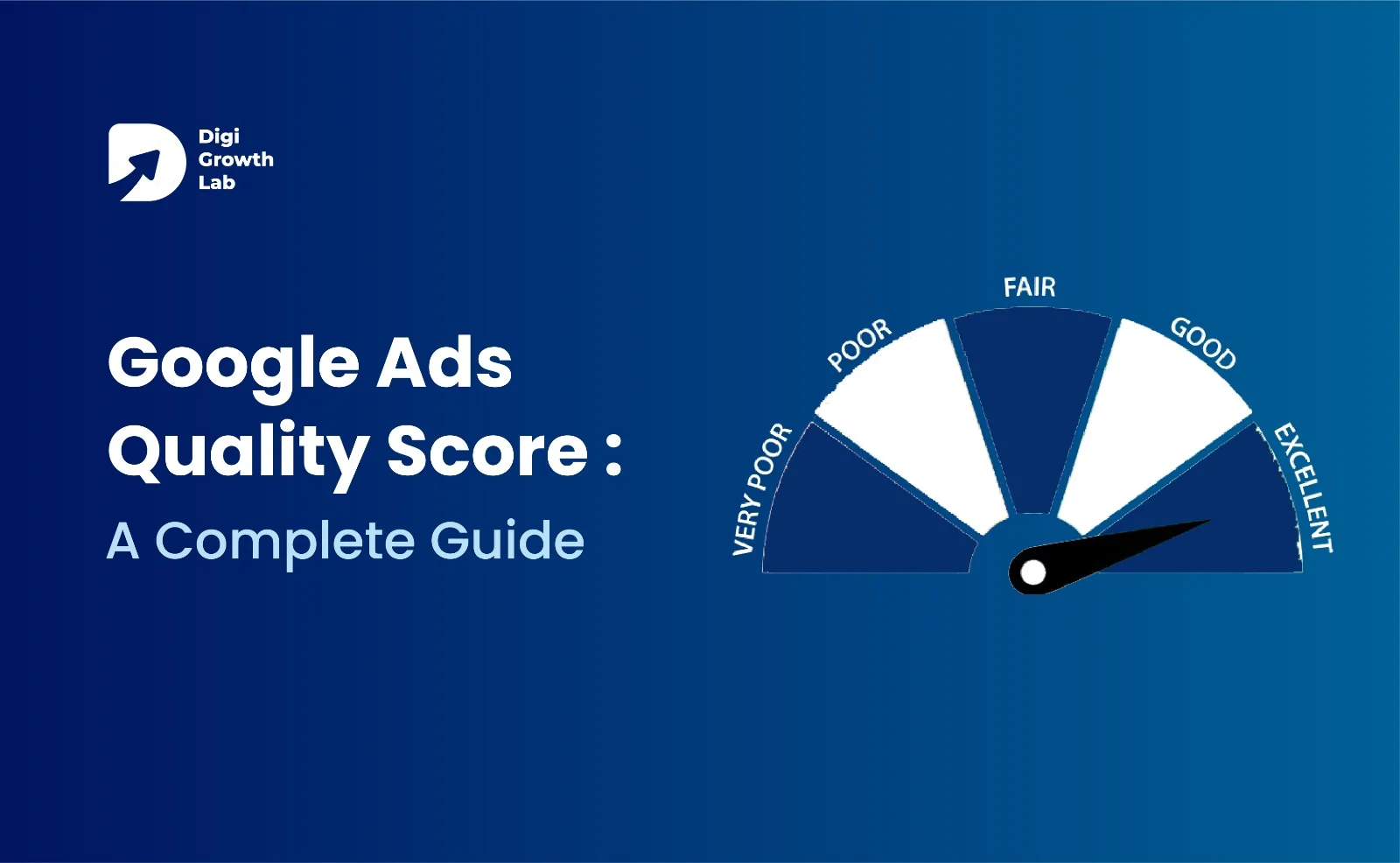
Quality Score is Google’s rating of how relevant and useful your ad, keyword, and landing page are, on a scale of 1 to 10. Most people glance at it and move on. That’s a mistake, because it directly controls what you pay.
Here’s the part that gets people’s attention. Compared to a baseline Quality Score of 5, industry analysis suggests a score of 7 can cut your cost-per-click by roughly 28%, and a perfect 10 can nearly halve it. Same clicks. Same keywords. You just pay a lot less because Google trusts your ad more.
Low Quality Score works in the other direction – you pay a premium for every single click, forever, until you fix the underlying relevance problem.
1. Expected Click-Through Rate (CTR): Is your ad copy compelling enough to earn clicks for that specific search?
2. Ad Relevance: Does your ad closely match what the user actually typed into Google?
3. Landing Page Experience: Does your landing page deliver exactly what the ad promised—and does it load quickly?
Landing page experience is where most accounts fall down, which brings us to the next leak.
Leak #4: Sending good clicks to a poor landing page
You can write brilliant ads, target perfectly, and still torch your budget if the page people land on is weak.
Think about it from the searcher’s side. Someone clicks an ad for “emergency plumber near me,” lands on your generic homepage, and has to hunt around for a phone number. They’re gone in three seconds. You paid for that click. You got nothing.
Real example. A SaaS company was running ads for a specific feature – “automated invoice reminders” – but sending every click to their general homepage. Conversion rate sat at a miserable 1.1%. They built one focused landing page that talked only about invoice reminders, with a clear signup button above the fold. Conversion rate jumped past 4%. Same ads, same budget – they nearly quadrupled their signups by fixing the destination, not the ads.
The Landing Page Test: Click your own ad on your phone. Can you tell what to do next within three seconds, without scrolling? If not, that’s leaking budget right now.
Leak #5: Broken or missing conversion tracking
This one is scarier than the others because it makes every other decision wrong.
If your conversion tracking is misfiring – double-counting, missing form submissions, not capturing phone calls – then Smart Bidding is learning from bad data. It optimizes toward the wrong signals, pours budget into keywords that “look” like they convert but don’t, and starves the ones that actually make you money.
You end up confidently steering the ship in the wrong direction.
• Confirm your conversion tracking tags actually fire by testing a real form submission and a test purchase.
• Make sure you’re tracking phone calls, not just form fills. Tools like CallRail can attribute calls to the campaign that generated them.
• Watch for double-counting conversions, where a single lead is recorded multiple times.
• Separate primary conversions from softer engagement actions so your bidding optimizes for actual revenue, not misleading signals.
Leak #6: Smart Bidding set up wrong
Smart Bidding (Target CPA, Target ROAS, and friends) makes hundreds of automated decisions a day. It’s powerful. It’s also easy to misconfigure in ways that quietly waste money.
Two common failure modes:
- Targets set too aggressively. Ask for a cost-per-lead that’s unrealistically low and the system either underspends and leaves real sales on the table, or chases cheap-but-worthless clicks to hit the number.
- Not enough conversion data. Smart Bidding needs a steady flow of conversions to learn. Point it at a campaign with a trickle of data and it flails, stuck in “learning” mode, spending inefficiently the whole time.
• Make sure a bid strategy has enough conversion history before you trust it to run solo.
• Set targets that reflect your real economics, not a wishful number.
• Check bid strategy status regularly for campaigns stuck in learning – that’s a red flag.
Leak #7: Click fraud and invalid traffic
Not every click comes from a real potential customer. Some come from bots, click farms, and competitors, and the numbers are bigger than most business owners expect.
Research cited across the ad-fraud industry suggests that, on average, somewhere in the range of 10–20% of PPC clicks are invalid or fraudulent, and it runs much higher in certain channels. Google’s Search Partner Network – third-party search sites beyond Google.com – has been flagged in 2025 research with fraud rates on some networks approaching 47%. Since PMax leans on that same inventory, it inherits the risk.
Google filters a lot of this automatically and issues credits for what it catches. But its filters miss plenty.
• Open your campaign settings, go to the Networks section, and test turning off Search Partners to measure its impact on lead quality and conversions.
• Monitor your campaigns for unusual spikes in clicks that don’t result in matching conversions or meaningful engagement—they could indicate invalid or low-quality traffic.
• If you’re managing a high-spend account, consider using an independent click-fraud detection tool to identify and block suspicious click patterns that Google’s automatic filters may miss.
A few small ways you lose money that are easy to miss
The big problems above waste the most. But these smaller ones add up too – so they’re worth a quick look.
- Search intent mismatch. You’re bidding on a keyword where the searcher wants information, not to buy. “How does solar work” is a very different person from “solar installer near me.” Bidding hard on the first one burns cash.
- Budget pacing problems. Your budget gets eaten early in the day by low-value traffic, so you’re invisible when your best customers search in the evening.
- Weak audience segmentation. Treating a first-time visitor and a repeat customer the same way means you overpay to reach people who’d have bought anyway.
- Ignoring first-party data. Your own customer and email lists are gold for targeting and for feeding Smart Bidding better signals. Most accounts never upload them.
- Attribution model mistakes. If you only credit the last click, you’ll defund the top-of-funnel campaigns that actually start the journey – and misread which campaigns deserve budget.
- Missing micro-conversions and offline conversion tracking. If a lead becomes a sale over the phone a week later, and you never feed that back into Google, the algorithm never learns which clicks lead to real revenue.
- AI Overviews and the shifting search page. As AI-generated answers take up more room at the top of results, the value of showing up – and where you show up – is shifting. It’s early, but it’s worth watching how your impression share and click quality move as the results page changes.
What the benchmarks actually say
Numbers help you sanity-check your own account, as long as you treat them as orientation, not targets. Here’s where things sit, based on WordStream / LocaliQ’s analysis of thousands of accounts.
| Metric | All-Industry Average (2025) | Notes |
|---|---|---|
| Search CTR | ~6.66% | Ranges from ~4.2% (Legal) to ~13% (Arts & Entertainment). |
| Conversion Rate | ~7.52% | Auto repair averages around 14.7%, while complex B2B industries tend to be lower. |
| Cost Per Click (CPC) | ~$5.26 | Legal averages around $8.58, while Entertainment is closer to $1.60. |
| Healthy Wasted Spend | Under 10–15% | Well-managed accounts typically stay below this range, while unaudited accounts often waste 20–40%+. |
One pattern worth noticing: high CTR and low CPC tend to travel together. That’s not a coincidence. A strong click-through rate lifts Quality Score, which pulls your cost-per-click down. Relevance pays for itself.
And a warning about averages – the gap between the best and worst industries is enormous. Comparing your account to the all-industry average is a bit like comparing your marathon time to the average pace of every human on earth, most of whom aren’t running. Use your own industry as the reference point.
Your 15-minute waste audit (do this today)
You don’t need a tool or an agency to find your first chunk of savings. Work through these five checks.
- Search Terms Report – sort by cost, last 90 days. Flag every term that spent money with zero conversions. Add negatives.
- Networks setting – is Search Partners on? Test turning it off.
- Hourly performance – pull the time-of-day report. Are you spending heavily in low-converting hours?
- PMax placements – check where your automated spend is actually landing. Exclude the junk.
- Bid strategy status – any campaigns stuck in “learning”? That’s inefficient spend flagging itself.
Checklist – signs your budget is leaking right now:
| ✅ Checklist – Signs Your Budget Is Leaking Right Now | Status |
|---|---|
| CTR consistently under 4% | ☐ |
| Negative keyword list hasn’t been updated in 30+ days | ☐ |
| Ads point to your homepage instead of a focused landing page | ☐ |
| Quality Scores are 5 or below on your top keywords | ☐ |
| You can’t say what percentage of last month’s spend resulted in zero conversions | ☐ |
| Conversion tracking has never been tested end-to-end | ☐ |
| Search Partners is enabled and you’ve never reviewed its performance | ☐ |
Three or more checked? You’re very likely in that 20–40% waste range.
Best practices that keep waste low for good
Fixing leaks once is good. Keeping them closed is better. The accounts that stay lean tend to do these things:
- Segment campaigns by intent. Keep brand, generic, and competitor terms in separate campaigns so their data doesn’t muddy each other.
- Review the Search Terms Report weekly. This is the single highest-return habit in paid search.
- Give automation clean signals. Accurate conversion tracking, first-party data, and offline conversions make Smart Bidding dramatically better.
- Build dedicated landing pages for your highest-spend keywords instead of dumping everyone on the homepage.
- Audit lightly every quarter, deeply once a year. Catching drift early stops small leaks from compounding.
The pattern across all of it: a smart, attentive strategy beats cheap clicks every time. WordStream’s own read on the 2025 data landed on exactly that – costs are rising, but performance is rising too for advertisers who actually manage their accounts.
Ready to find out where your budget is actually going?
If reading this made you a little nervous about your own account, that’s a good instinct – and it usually means there’s money worth recovering. A proper audit of your search terms, match types, tracking, and Performance Max placements almost always turns up spend that can be redirected toward the clicks that actually bring in customers.
If you’d like a second set of eyes on your campaigns, the team at Digi Growth Lab can walk through your account with you and show you exactly where the leaks are – no jargon, no pressure, just a clear picture of what’s working and what’s quietly costing you.
Need Help Stopping Google Ads Budget Waste?
Most Google Ads accounts waste budget on hidden issues. We’ll identify where your money is leaking and show you how to improve conversions.
Frequently Asked Questions
How much of my Google Ads budget is really being wasted?
For accounts that aren’t actively managed, 20–40% is the range auditors keep finding, and some run higher than 50%. A well-run account keeps clearly wasted spend under about 10–15%.
Is broad match always bad?
No. Broad match can work well when it’s paired with Smart Bidding that has real conversion data and a solid negative keyword list. Used without those guardrails, it’s where most waste comes from.
Why does Performance Max spend my budget so fast?
Because it runs across all of Google’s networks at once, including cheaper Display and partner inventory. Some of that traffic converts poorly. Check your placement reporting and exclude the low-value sites.
How do I lower my cost per click?
Improve Quality Score. Better ad relevance and a stronger landing page can meaningfully cut your CPC – moving from a score of 5 to 7 can reduce it by around a quarter.
How often should I check my account?
Look at the Search Terms Report weekly. Do a light audit quarterly and a deep one at least once a year, or any time performance shifts sharply.
Can Google be trusted to optimize my account for me?
Google’s automation is genuinely capable, but its defaults are tuned for reach and for spending your budget, not for protecting your margin. It needs a human setting the guardrails and feeding it clean data.