
Many SaaS companies invest in SEO. Traffic goes up. Sign-ups do not.
The problem is rarely rankings or content volume. It is intent. Most SEO pages pull in people who are still researching. They are not ready to choose a tool yet.
There is hard data behind this. Gartner found that B2B buyers spend only about 17 percent of their buying journey talking to vendors. The rest is self-directed research. When buyers weigh several tools at once, they may spend as little as 5 to 6 percent of their time with any single sales rep.
So most of the decision happens on your pages, long before anyone fills out a form. That is why SaaS SEO has to be built around buyer decisions, not keyword counts.
The numbers below show how little of the decision you actually control, and why your pages have to do the selling.
| The number | What it means for SaaS SEO | Source |
|---|---|---|
| 17% | Share of the buying journey B2B buyers spend with vendors. The other 83% is self-directed research on your pages. | Gartner |
| 6 to 10 | Decision-makers in a typical B2B buying group, each arriving with their own research. Your pages have to convince all of them. | Gartner |
| 75% | B2B buyers who prefer a buying experience with no sales rep involved. Forced demos work against them. | Gartner |
| ~8% | Median free-to-paid conversion rate for SaaS. Small page and intent gains move this number a lot. | ChartMogul |
How SaaS Buyers Actually Search
SaaS buyers do not move in a clean funnel. Real search behavior is messy. In one session, a buyer may check a problem, compare methods, then look at a product. Then they leave and come back days later.
So SEO should map to what buyers do, not to neat content stages. Three search behaviors matter most.
Problem-validation searches
Buyers first want to confirm the problem is real and worth fixing. These queries are about workflow gaps, wasted time, errors, or lost revenue. Pages for this intent should show business impact. Definitions are not enough. If the page does not connect the problem to cost or risk, the buyer moves on.
Solution-comparison searches
Before choosing a tool, buyers compare approaches, not brands. This is where most SaaS SEO fails. Companies publish blogs when buyers want clear solution pages. A strong page sits between a blog and a product page. It explains how the problem gets solved and where your product fits.
Risk-reduction searches
Just before sign-up, buyers look for proof. They check use cases, integrations, team fit, and limits. And most SaaS purchases involve a group, not one person. Gartner puts the typical B2B buying group at 6 to 10 people. Each one arrives with their own research. If your pages do not answer their doubts, the deal stalls.
Map SEO to these three behaviors. Traffic quality improves. Sign-ups follow.
The Pages That Turn Organic Traffic Into Sign-Ups
Most SaaS sites lean on blogs to convert. Blogs rarely trigger a sign-up on their own. What converts is decision-focused pages. These answer buyer doubts fast. Four page types do most of the work.
Use-case pages
Buyers want to picture themselves using the tool. A good use-case page takes one clear problem. It shows how the product fits that workflow. It ends with the outcome. Skip the feature list. Focus on “how this solves my daily problem.”
Comparison pages
Buyers actively search comparisons before they sign up. These are high-intent queries. Think “best [category] software,” “[your product] vs [competitor],” and “[competitor] alternatives.” Write them honestly. Show clear differences, real limits, and best-fit cases. Honest comparison pages build trust and reach buyers who are close to deciding.
Integration pages
Integration pages convert when they show real use, not just logos. Explain what changes after the integration. Show what gets automated. Name the problem that goes away. These pages attract buyers who are ready to test.
Proof pages
Before sign-up, buyers want reassurance. Answer the question “will this work for my team size, tools, and setup?” Case studies, security details, and clear limits remove the last bit of doubt.
When SEO points traffic at these pages, the traffic is qualified by default.
Show Product Signals, Not Marketing Copy
Search visitors evaluate carefully. They scroll deep. They revisit sections. They compare details before they act. Pages that only list benefits do not satisfy them. They want proof of how the tool works.
High-performing SaaS pages use product signals. A product signal is a small, clear sign of how the tool actually works. A short workflow explanation. A real screenshot tied to a use case. A simple before-and-after view.
One more thing matters here. Clarity beats completeness. A buyer who understands one core workflow is closer to signing up than one shown ten features at once. Show one strong use case well. Do not try to explain everything.
If your visitors read but do not act, the issue is usually not traffic. It is missing product clarity. Rankings are not the same as sign-ups, and even SEO visibility only pays off when buyers understand your product. Make the product easy to grasp, and sign-ups rise on their own.
Get Cited in AI Answers, Not Just Ranked
Search is changing fast. Buyers now ask AI tools before they open a single website. Google shows AI Overviews at the top of results. Buyers use ChatGPT, Gemini, and Perplexity to build shortlists. Often they read an AI answer and never click through.
This changes SaaS SEO. Ranking is no longer enough. Your product needs to be understood and cited by AI systems too.
To earn that, write for extraction. Put clear, direct answers near the top of the page. Define terms plainly. Structure comparisons so a machine can read them. Keep facts accurate and easy to quote. Well-structured, trustworthy pages are the ones AI tools pull from.
That is the point of good AI SEO services. Rank in classic search and show up in AI answers at the same time.
Convert Without Pop-Ups, Gated Content, or Forced Demos
Most SaaS sites lose organic sign-ups by interrupting people too early. A pop-up on arrival is the fastest way to send a search visitor back to Google.
There is an SEO cost too. Google’s own guidance says intrusive pop-ups and overlays that block your content can hurt search performance. This applies right when someone taps your result. So aggressive gates can cost you rankings and conversions at the same time.
Buyers also resist pressure. Gartner found that about 75 percent of B2B buyers prefer a buying experience with no sales rep involved. Forcing a demo works against that.
Guide buyers instead. Three moves work better.
Use intent-based internal links
A reader who moves from a blog to a comparison, integration, or pricing page is closer to signing up. Place clear internal links after key points. They beat any pop-up.
Offer a soft step before sign-up
Options like “see how it works for your team” or “view a real setup” lower the pressure. A soft step often converts better than a hard push to a demo.
Use one CTA per page
Many CTAs confuse people. One clear action, matched to intent, moves more readers to the next step.
When buyers feel in control, sign-ups happen on their own.
The SaaS SEO Metrics Worth Tracking
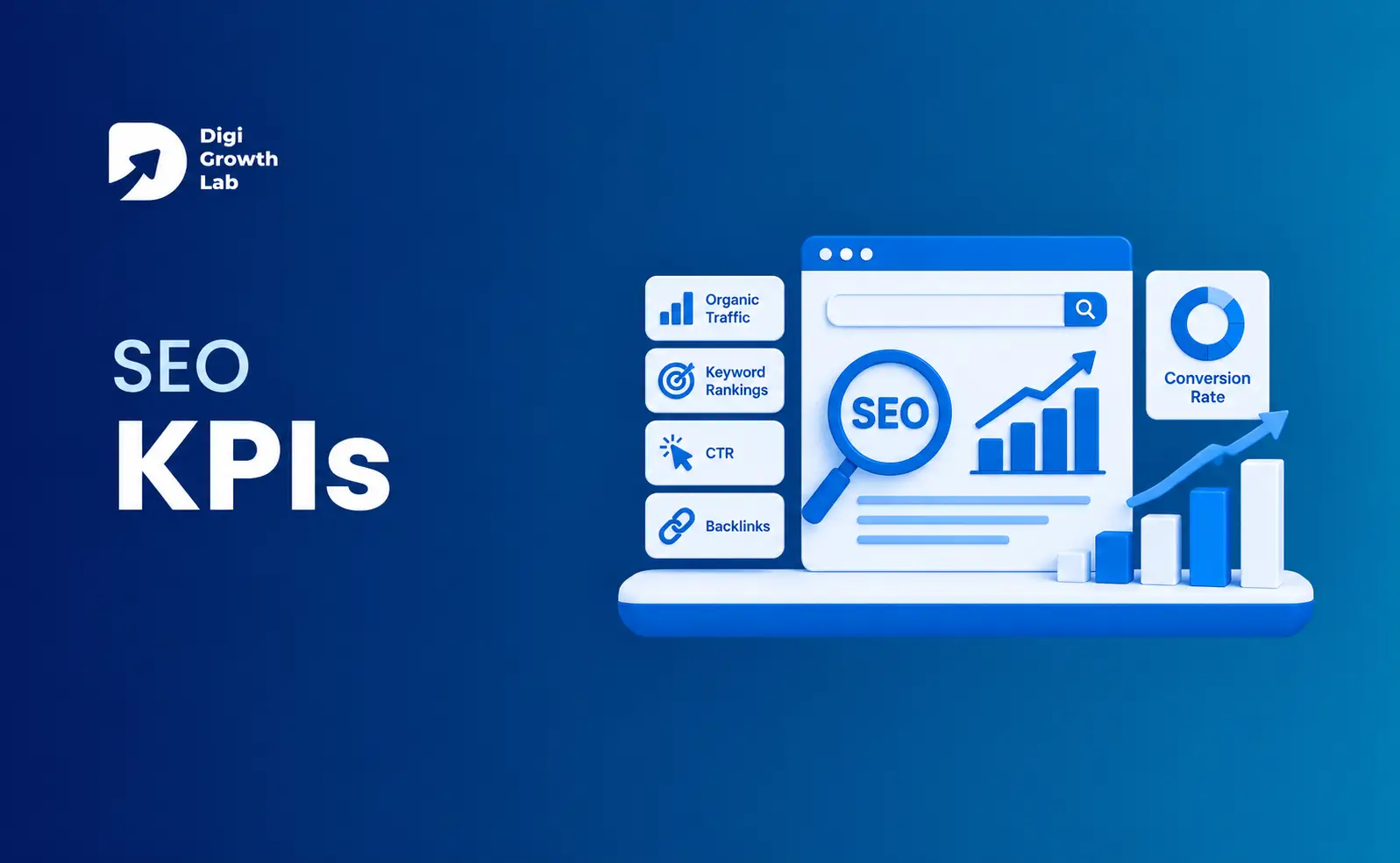
Most SaaS teams track rankings and sessions. Those numbers do not explain why sign-ups rise or stall. Track decision signals instead. Our full guide to SEO KPIs goes deeper, but four metrics matter most for SaaS.
Organic-assisted sign-ups
Many buyers visit through search early, then convert later through another channel. Last-click reporting hides this. Track how many sign-ups had at least one organic visit along the way. If that number is low, SEO is not shaping decisions yet.
Path depth before sign-up
Look at how many pages a buyer views before converting. Buyers who reach a use case, a comparison, and a pricing page are close to a decision. If they bounce after one page, your intent mapping is off.
Reach to pricing and comparison pages
Check how many organic visitors reach your pricing or comparison pages. If few do, your traffic is informational, not evaluative. Fix internal links before publishing more posts.
Time to first action
Track the time from the first organic visit to the first real action, like a pricing view or a demo click. Shorter time usually means better intent match.
It also helps to know what good looks like. SaaS benchmark data gives a useful guide. ChartMogul puts the median free-to-paid conversion rate near 8 percent. First Page Sage found that opt-in trials with no credit card convert to paid near 18 percent, while credit-card trials convert far higher. In that same data, organic and paid trial users convert at broadly similar rates once they start a trial. So SEO’s real edge is not a magic conversion lift. It is steady, lower-cost, qualified volume that compounds over time.
How Digi Growth Lab Approaches SaaS SEO
We do not treat SEO as a traffic channel. We treat it as part of how buyers decide. Our SaaS SEO work starts with how buyers evaluate tools, not with how keywords rank.
We map search intent to real workflows. We build pages around the use cases, integrations, and pricing questions buyers actually care about. We work with product and growth teams so the pages match how the product really works.
Our search engine optimization services focus on assisted conversions, shorter decision time, and better trial quality. Not just sessions. We have helped SaaS clients grow qualified leads before, including a 51 percent increase in qualified leads for a SaaS platform. The aim is simple. SEO that supports product-led growth and ties back to revenue.
Getting organic traffic but not sign-ups?
We will review your SaaS pages and search paths, then show you plainly where high-intent buyers drop off and why.
Frequently Asked Questions
What is SaaS SEO?
SaaS SEO is search optimization built around how software buyers choose a tool. It targets problem, comparison, and decision queries. The goal is qualified sign-ups, not just traffic.
Why does my SaaS SEO traffic not convert into sign-ups?
Usually the traffic is early-stage. It lands on blog posts, not decision pages. Buyers researching a problem are not ready to sign up yet. Point them to use-case, comparison, and pricing pages instead.
Which pages drive the most SaaS sign-ups?
Decision pages do most of the work. Use-case pages, honest comparison pages, integration pages, and proof pages convert far better than general blog posts.
How long does SaaS SEO take to work?
Organic growth usually builds over three to six months. Decision pages that target high-intent queries can convert sooner, since they reach buyers who are close to choosing.
How is SaaS SEO measured?
Track decision signals, not vanity metrics. Watch organic-assisted sign-ups, path depth before sign-up, reach to pricing and comparison pages, and time to first action.
Should SaaS SEO focus on blog posts or product pages?
Both, but with different jobs. Blog posts bring in early-stage buyers and build topical authority. Product, use-case, and comparison pages do the converting. Problems start when a site relies on blogs alone to drive sign-ups. Plan blogs to feed decision pages, then let those pages close the loop.